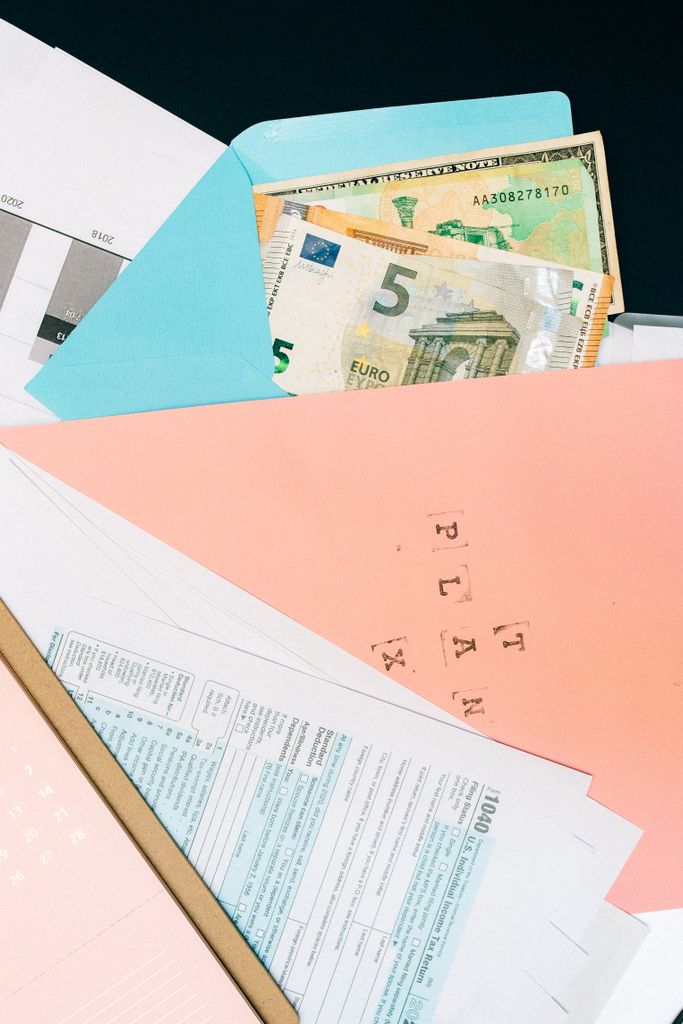
작년 1월, 연말정산 결과 통지서를 열어보고 “어? 왜 이것밖에 안 돌아왔지” 하고 멍해진 적 있는가. 연봉 5천만원 받는 직장인 기준으로 환급액이 10만원 남짓이었다면, 열 명 중 여덟아홉은 연금저축 계좌를 아예 쓰지 않았거나 한도를 한참 밑도는 금액만 넣어뒀을 가능성이 크다. 반대로 같은 소득인데 148만원 넘게 돌려받는 동료가 있다면, 그 사람은 별다른 재테크 비법을 쓴 게 아니라 그냥 연금저축과 IRP에 한도껏 납입했을 뿐이다. 148만원이면 괜찮은 노트북 한 대 값이고, 겨울철 가족여행 경비로도 충분한 돈이다. 직장인들의 로망이라는 “13월의 월급”이 과장처럼 들릴 수 있는데, 숫자로 따져보면 의외로 허풍이 아니다.
“낸 돈 그대로 돌려받는 거 아니었어?” 세액공제의 진짜 구조
세액공제라고 하면 납입한 돈을 나중에 그대로 돌려받는 걸로 오해하는 경우가 많다. 그런데 정확히는 “낸 세금 중 일부를 깎아주는” 개념이다. 연금저축이나 IRP에 돈을 넣으면 그 납입액에 일정 비율(공제율)을 곱한 만큼 내야 할 세금에서 빼준다는 뜻이다. 다시 말해 900만원을 넣었다고 900만원이 돌아오는 게 아니라, 900만원의 16.5%인 148만 5천원 정도가 세금에서 차감되는 식이다. 이 차이를 모르고 “나는 올해 900만원 넣었으니 900만원 돌려받겠지”라고 기대했다가 실망하는 사례를 종종 본다.
그런데도 세액공제가 소득공제보다 체감 효과가 크다는 점은 짚어둘 만하다. 소득공제는 과세표준을 낮춰서 세율 구간에 따라 효과가 들쭉날쭉한데, 세액공제는 계산된 세금에서 곧바로 차감되니 계산이 비교적 단순하고 예측 가능하다. 쉽게 말해 소득공제는 “세금을 매기는 기준 자체를 줄여주는 것”이고, 세액공제는 “이미 계산 끝난 세금 고지서에서 바로 깎아주는 것”이라고 보면 된다.
연금저축과 IRP, 한도가 왜 따로 노는 걸까
연금저축 하나만 알고 있다가 IRP 얘기가 나오면 헷갈려 하는 사람이 많다. 둘 다 노후 자금을 모으는 계좌인 건 맞는데, 세액공제 한도 구조가 조금 다르게 설계돼 있다. 일반적으로 연금저축은 연간 600만원까지 세액공제 대상 납입액으로 인정된다. 여기서 많은 사람이 헷갈리는 포인트가 있는데, 600만원이 끝이 아니라는 점이다. IRP 계좌를 추가로 개설해서 납입하면 연금저축과 합산해 최대 900만원까지 한도가 늘어난다. 쉽게 말해 연금저축만으로는 600만원이 천장이고, 모자란 300만원을 채우고 싶으면 IRP를 열어야 한다는 얘기다.
반대로 IRP만 가입해서 900만원을 전부 채워 넣는 것도 가능하다. IRP는 단독으로도 900만원 한도를 다 쓸 수 있는 구조이기 때문이다. 연금저축은 600만원이 상한이라 그 이상은 아예 세액공제 계산에 들어가지 않는다는 점이 다르다. 그래서 “연금저축에 900만원 넣었다”는 사람을 만나면 실제로는 600만원까지만 공제 혜택을 보고 나머지 300만원은 그냥 저축으로 묶여 있는 셈이다.
900만원을 채웠을 때 실제 계산은 이렇게 흘러간다
예를 들어 연봉 4천만원인 직장인이 연금저축에 월 50만원씩 연간 600만원, IRP에 월 25만원씩 연간 300만원을 넣었다고 해보자. 합산 900만원이 한도를 딱 채운 금액이다. 이 경우 종합소득금액 4,500만원(총급여 기준 약 5,500만원) 이하 구간에 해당하면 공제율 16.5%가 적용돼서 900만원 × 16.5% = 148만 5천원이 세액에서 공제된다. 월 75만원씩 꾸준히 넣었을 뿐인데 연말정산에서 148만원 넘는 돈이 돌아온다고 하면, 체감상 적지 않은 금액이다.
소득이 더 높은 경우는 어떨까. 종합소득금액이 4,500만원을 넘기면 공제율이 13.2%로 낮아진다. 같은 900만원을 넣어도 900만원 × 13.2% = 118만 8천원으로 환급액이 줄어든다. 소득이 높을수록 세율 구간도 올라가는데 공제율은 오히려 낮아지니 “버는 만큼 혜택도 커지겠지”라고 기대했다면 의외의 결과다. 이 구조를 모르고 고소득 지인의 환급액만 듣고 비교했다가 괜히 실망하는 경우도 있다.
여기서 한 가지 더 생각해볼 지점이 있다. 연금저축 계좌에 돈을 넣어두기만 하고 그대로 방치하면 보통 수시입출금 통장과 크게 다를 바 없는 낮은 수준의 이자만 붙는다. 반면 계좌 안에서 펀드나 예금성 상품으로 적절히 배분해 운용하면 세액공제 혜택에 더해 장기 복리 효과까지 노릴 수 있는 구조다. 다만 어떤 상품을 얼마나 담을지는 개인의 투자 성향과 은퇴 시점에 따라 전혀 달라지는 문제라, 이 글에서는 특정 상품을 권하기보다 “그냥 넣어두는 것과 운용하는 것은 결과가 다르다”는 원리만 짚고 넘어가려 한다.
아는 사람만 아는, 가입자들이 가장 많이 하는 착각 세 가지
첫째, 한도를 넘겨서 납입하면 손해라는 오해다. 900만원을 넘겨 넣어도 세금 혜택이 없을 뿐이지 불이익이 생기는 건 아니다. 다만 세액공제 효과가 없는 초과분까지 노후 자금 계좌에 묶이는 셈이니, 자금 계획을 세울 때는 한도 안에서 채우는 쪽이 효율적이다.
둘째, 중도에 해지하면 그동안 받은 공제 혜택을 그냥 포기하면 끝이라고 생각하는 경우다. 실제로는 다르게 흘러간다. 그동안 세액공제를 받았던 납입액과 그 사이 불어난 운용 수익을 합쳐서, 연금 외 형태로 찾아갈 때 16.5%의 기타소득세가 부과된다. 말하자면 몇 년간 야금야금 아꼈다고 믿었던 세금을 해지하는 순간 한꺼번에 게워내는 셈이다. 벌써 몇 년치 공제를 받은 상태에서 해지를 고민한다면 이 부분을 먼저 계산기로 두드려봐야 후회가 없다.
셋째, 연금 수령 시점에는 세금이 전혀 없다고 오해하는 것이다. 연금 형태로 받을 때는 저율의 연금소득세가 부과된다. 일반적으로 연령에 따라 세율이 다르게 적용되는 구조인데, 그래도 처음 납입할 때 받은 세액공제율보다는 낮은 편이라 장기적으로 보면 유리한 쪽으로 기울어져 있다.
자, 그럼 연말 되기 전에 뭘 체크해야 할까
발등에 불이 떨어져서야 “올해 얼마 넣었더라” 하고 계좌를 확인하는 사람이 의외로 많다. 연중에 미리 자동이체를 걸어두면 월말마다 급하게 목돈을 넣을 필요 없이 자연스럽게 한도를 채울 수 있다. 예를 들어 연금저축 월 50만원, IRP 월 25만원으로 자동이체를 설정해두면 연말에 따로 신경 쓰지 않아도 900만원 한도가 채워진다.
또 하나, 국세청 홈택스나 각 금융사 앱에서 연중 누적 납입액을 수시로 확인할 수 있다는 점도 기억해두면 좋다. 연말에 몰아서 넣으려다 한도를 착각해서 초과 납입하는 경우도 종종 있으니, 미리 숫자를 확인하는 습관이 번거로움을 줄여준다. 10월인 지금 확인해보면 1월부터 지금까지 얼마나 넣었는지, 남은 두세 달 동안 얼마를 더 넣어야 한도를 채울 수 있는지 바로 계산이 나온다.
오늘의 핵심만 다시 정리하면
연금저축 600만원과 IRP 300만원을 합쳐 최대 900만원까지 세액공제 대상이 되고, 종합소득금액 4,500만원을 기준으로 공제율이 16.5% 또는 13.2%로 갈린다. 900만원을 꽉 채우면 환급액은 각각 148만 5천원, 118만 8천원 선이다. 중도 해지하면 그동안 아꼈던 세금만큼을 기타소득세로 다시 토해낼 수 있다는 점, 이 세 가지만 기억해도 연말정산 전략의 절반은 세운 셈이다.
자주 묻는 질문
Q1. 연금저축과 IRP 중 하나만 가입해도 되나요?
가능하다. 다만 연금저축만 가입한 경우 세액공제 한도는 600만원까지만 적용되고, 900만원 전체 한도를 쓰고 싶다면 IRP를 추가로 개설해야 한다는 점을 기억해두자.
Q2. 올해 한도를 못 채웠는데 내년에 몰아서 넣으면 소급 적용되나요?
아니다. 세액공제는 해당 과세연도에 납입한 금액을 기준으로 계산되기 때문에, 작년에 못 채운 한도를 올해 추가로 넣는다고 해서 작년 귀속으로 공제받을 수는 없다. 연도별로 각각 한도 안에서 납입해야 한다.
Q3. 세액공제를 받으면 나중에 연금으로 꼭 받아야 하나요?
법적으로 정해진 최소 가입 기간과 수령 연령 요건을 채워야 연금 형태로 받을 수 있고, 그 요건을 충족하지 못한 채 중도 인출하면 기타소득세가 부과되는 구조다. 그래서 가입할 때부터 장기 자금이라는 전제로 접근하는 편이 현실적이다.
외계인이 있냐고 물으면 열에 아홉은 “그걸 누가 알아”라고 답한다. 그런데 1961년 어느 가을날, 미국 웨스트버지니아의 한 전파천문대에서 한 천문학자가 칠판에 숫자 일곱 개를 나란히 적어 넣고는 은하 안에 우리와 대화할 수 있는 외계 문명이 몇 개쯤 있을지 계산해버렸다. 공식 하나로 외계인 존재를 숫자로 뽑아낸다는 게 황당하게 들릴 수 있지만, 이 사람이 바로 프랭크 드레이크(Frank Drake)고 그날 만든 식이 지금까지도 회자되는 ‘드레이크 방정식’이다.
그린뱅크 천문대에서 열린 이 모임은 사실 거창한 학회라기보다는 소규모 워크숍에 가까웠다. 참석자는 열 명 남짓, 그중에는 훗날 ‘코스모스’로 유명해지는 칼 세이건도 있었다. 드레이크는 이들과 토론할 공통의 틀이 필요했고, 그래서 즉흥적으로 변수 일곱 개를 곱하는 식을 만들었다. 재미있는 건 이 식이 처음부터 정답을 내놓으려는 목적이 아니었다는 점이다. 드레이크 본인도 훗날 인터뷰에서 이건 “무엇을 모르는지 정리하기 위한 도구”였다고 말한 적이 있다. 어떻게 보면 과학자들이 모여 만든 체크리스트였던 셈인데, 그 체크리스트가 60년 넘게 살아남아 사람들 입에 오르내릴 줄은 드레이크 본인도 예상하지 못했을 것이다.
1961년 그린뱅크 천문대에서 드레이크 방정식이 처음 등장했다.
방정식 뜯어보기: N = R* × fp × ne × fl × fi × fc × L
칠판에 적힌 이 알파벳 나열을 수학 시험 문제 보듯 대할 필요는 없다. 뜯어보면 의외로 상식적인 질문들의 나열이고, 어찌 보면 “우리가 우주에서 정말 외톨이인가”를 하나씩 확인해가는 체크리스트에 가깝다. 맨 앞의 R*는 우리 은하에서 1년에 별이 몇 개나 새로 태어나는가를 뜻한다. 은하수에는 별이 대략 1천억~4천억 개 있다고 추산되니, 그중 매년 태어나는 별의 숫자만 해도 꽤 큰 값이다. 여기에 fp, 그러니까 그 별들 중 행성을 거느린 비율을 곱한다. 1990년대까지만 해도 이 숫자는 순수한 추측에 가까웠다.
그다음이 ne다. 한 별에 딸린 행성 중 생명이 살 수 있는 환경, 그러니까 물이 액체로 존재할 수 있는 ‘골디락스 존’에 들어가는 행성의 평균 개수를 말한다. 여기까지는 그나마 망원경으로 검증이 가능한 영역이다. 문제는 그다음부터다. fl(생명이 실제로 발생할 확률), fi(그 생명이 지적 문명으로 진화할 확률), fc(그 문명이 외부에 신호를 보낼 기술을 가질 확률)로 넘어가면 사실상 답을 아는 사람이 없다. 지구라는 표본이 딱 하나뿐이니 확률이 1분의 1인지 1조분의 1인지조차 가늠하기 어렵다.
우주에 우리 같은 ‘이웃’이 10명 있을까, 1,000만 명 있을까
드레이크가 그날 모임에서 대입해 본 숫자들로는 N이 10 안팎이었다고 전해진다. 은하 전체에 교신 가능한 문명이 열 개쯤 있다는 뜻인데, 놀랍게도 같은 공식에 어떤 값을 넣느냐에 따라 결과는 1보다 작은 값부터 수천만에 이르기까지 천차만별로 벌어진다. 칼 세이건은 이 식에 꽤 낙관적인 상상을 담아 은하계 안에 서울시 인구보다 많은 문명이 있을지도 모른다는 식의 추정을 내놓은 적이 있고, 반대로 비관적인 쪽에서는 fi와 fc를 극도로 낮게 잡아 지구가 우주라는 망망대해에 홀로 떠 있는 로빈슨 크루소라는 결론에 다다르기도 한다. 똑같은 식에 숫자만 다르게 넣었을 뿐인데 결과가 이렇게까지 벌어진다는 사실 자체가 이 방정식의 정체를 말해준다. 정답을 내는 공식이 아니라, 우리가 아직 모르는 영역이 얼마나 넓은지를 드러내는 거울인 셈이다.
외계 행성 5천 개 시대, 숫자는 얼마나 좁혀졌을까
1961년에는 태양계 밖 행성이 단 하나도 확인되지 않았다. 지금은 사정이 완전히 다르다. 케플러 우주망원경을 비롯한 관측 프로젝트 덕분에 확인된 외계 행성이 5천 개를 훌쩍 넘었고, 이 데이터를 바탕으로 fp와 ne는 더 이상 순수한 짐작이 아니게 됐다. 의외로 밝혀진 사실 하나는, 별 주위에 행성이 있는 경우가 드문 일이 아니라 오히려 보편적인 현상에 가깝다는 점이다. 이제는 밤하늘의 별을 올려다보며 “저 별에도 행성이 있을까”를 궁금해할 게 아니라, “저 별에 딸린 여러 행성 중 몇 번째 녀석이 지금 이 순간 우리 쪽을 바라보고 있을까”를 상상해야 하는 시대가 된 셈이다.
하지만 fl부터 L까지 뒤쪽 변수들은 여전히 깜깜하다. 지구에서 생명이 탄생하기까지 걸린 시간, 단세포 생물에서 지적 존재로 진화하기까지 걸린 수억 년의 시간을 생각하면 이 과정이 우주적으로 흔한 사건인지 기적에 가까운 우연인지 가늠조차 쉽지 않다. 그래서 ‘레어 어스 가설’ 같은 반대 입장도 나온다. 지구형 행성에 물이 있는 것과 그 물에서 복잡한 생명체가 태어나는 것은 전혀 다른 차원의 문제라는 주장이다. 물론 이것 역시 하나의 가설이지, 확정된 사실로 받아들일 단계는 아니다.
확인된 외계 행성이 5천 개를 넘으며 방정식의 앞쪽 변수는 점점 더 정밀해지고 있다.
문명의 수명이라는 아슬아슬한 변수
일곱 개 변수 중 가장 서늘한 건 사실 마지막 L이다. 신호를 보낼 기술을 가진 문명이 그 상태로 얼마나 오래 버티느냐를 뜻하는데, 인류 기준으로 보면 전파를 쏘기 시작한 지 채 100년이 안 됐다. 우주적 시간 척도로 보면 눈 깜빡할 사이에도 못 미치는 찰나다. 그런데도 같은 100년 사이 인류는 자신을 몇 번이고 멸망시킬 수 있는 핵무기를 만들었고, 기후 위기라는 자해에 가까운 문제까지 떠안았다. 우주로 신호를 쏘아 보낼 능력을 손에 쥔 바로 그 시점에 스스로를 지워버릴 능력까지 함께 쥐었다는 건 아이러니하다면 아이러니한 일이다.
그래서 일부 연구자들은 L 값이 생각보다 훨씬 짧을 수 있다고 추정한다. 기술 문명이 전파를 쏘기 시작한 뒤 자멸이든 자원 고갈이든 어떤 이유로든 수백 년 안에 조용해져 버린다면, 설령 은하 안에 수천 개의 문명이 명멸했더라도 지금 이 순간 동시에 신호를 주고받을 수 있는 상대는 거의 없을 수밖에 없다. 반딧불이 수천 마리가 넓은 들판에서 제각각 짧게 깜빡이는 장면을 떠올리면 비슷하다. 한 마리가 빛나는 순간과 다른 한 마리가 빛나는 순간이 겹치기란 생각보다 훨씬 어렵다.
그럼 다들 어디 있는 거야: 페르미 역설
드레이크 방정식의 결과값이 수백만이든 수천이든, 거기서 자연스럽게 이어지는 질문이 하나 있다. 물리학자 엔리코 페르미가 던졌다고 알려진 그 유명한 질문, “그럼 다들 어디 있는데?”다. 은하 나이가 100억 년을 훌쩍 넘고 그 안에 문명이 수백만 개쯤 있었다면 누군가는 벌써 은하 전체로 퍼져나갔어야 하는데 현실은 깜깜무소식이다. 이 간극을 ‘페르미 역설’이라 부른다.
누군가는 문명이 핵전쟁이나 기후 위기 같은 자체 요인으로 금방 멸망해버려서 L 값이 극단적으로 작다고 말한다. 누군가는 애초에 지적 생명체로의 진화 자체가 기적에 가까운 확률이라 fi가 거의 0에 수렴한다고 주장한다. 어느 쪽이 맞는지 가려줄 증거는 아직 없다. 분명한 건 하나다. 드레이크 방정식은 질문지에 답을 채워 넣는 시험이 아니라, 빈칸을 하나씩 들여다보게 만드는 거울이라는 점이다. 숫자 일곱 개를 채우려는 시도 하나하나가 천문학과 생물학, 화학을 넘나드는 연구를 수십 년째 이어오게 만든 원동력이었고, 어쩌면 우리가 밤하늘을 올려다볼 때마다 품는 그 막연한 호기심의 가장 정교한 버전이 바로 이 방정식일지도 모른다.
자주 묻는 질문
드레이크 방정식으로 나온 N값은 정확한 숫자인가요?
아니다. 뒤쪽 변수(fl, fi, fc, L)는 관측값이 아니라 가정값이라 연구자마다 넣는 숫자가 크게 다르다. 그래서 N은 하나의 정답이 아니라 가정에 따라 요동치는 추정 범위로 봐야 한다.
외계 생명체가 실제로 존재한다는 증거가 나온 적이 있나요?
아직은 없다. 화성 운석이나 특정 외계 행성의 대기 성분을 두고 생명체의 흔적일 수 있다는 가설이 제기된 적은 있지만, 과학계에서 합의된 확정적 증거로 인정된 사례는 지금까지 없다.
드레이크 방정식은 지금도 쓰이고 있나요?
SETI 연구자들과 천체생물학자들은 지금도 이 틀을 기본 참고 모델로 사용한다. 다만 외계 행성 관측 데이터가 쌓이면서 앞쪽 변수(R*, fp, ne)는 점점 더 정밀한 추정치로 대체되고 있고, 뒤쪽 변수는 여전히 열린 질문으로 남아 있다.
배추는 김치로만 먹는 거 아니냐 싶겠지만, 가을 배추는 김장 전에 먼저 맛봐야 하는 재료다. 여름 배추가 아삭함만 겨우 남은 상태라면, 서리 내리기 직전의 가을 배추는 씹을수록 단물이 배어 나오는 이른바 ‘설탕 배추’에 가깝다. 찬바람이 불기 시작하면 배추 속이 꽉 차고 당도가 오르는데, 이 타이밍을 놓치고 바로 김치로 직행시키는 건 솔직히 아깝다.
퇴근하고 지친 몸으로 들어왔는데 뭘 해 먹을지 막막한 날, 배추 반 포기만 있으면 상이 꽤 그럴듯해진다. 겉절이 한 접시, 구수한 된장국 한 그릇, 노릇하게 부친 배추전 한 장. 셋 다 재료비가 몇천 원 수준이고 손이 많이 가지도 않아서, 장 보러 가는 길에 배추 한 포기만 집어 들면 이 세 가지를 한 번에 돌려가며 해 먹을 수 있다.
배추 겉절이, 절이는 시간이 전부다
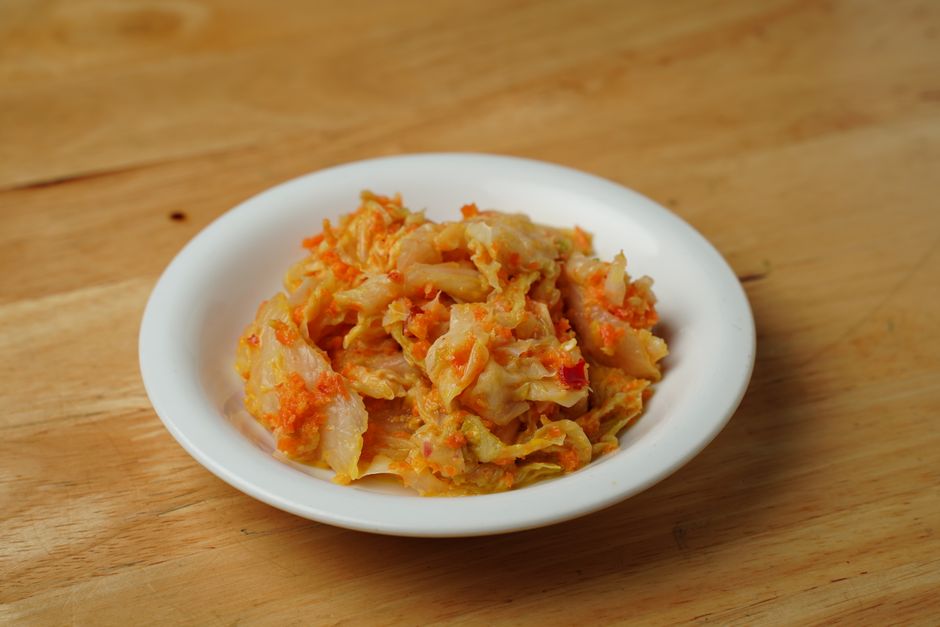
겉절이는 양념 비율보다 절이는 시간에서 맛이 갈린다. 배추를 소금물에 담가만 두면 되는 줄 알고 대충 10분 만에 건져내는 사람이 의외로 많은데, 그렇게 하면 양념이 배추 표면에서 겉돌기만 하고 속까지 스미지 않는다. 반대로 너무 오래 절이면 숨이 다 죽어서 아삭한 식감 자체가 사라진다.
기본 재료는 이렇다.
알배기 배추 반 포기(약 500g)
굵은소금 1큰술(절임용)
고춧가루 2큰술, 멸치액젓 1.5큰술
다진 마늘 1큰술, 설탕 또는 매실청 1큰술, 통깨 약간
배추를 한입 크기로 썰어 소금을 뿌리고 20~25분 절인 뒤, 중간에 한 번 뒤적여준다. 이 한 번의 뒤적임을 생략하면 아래쪽만 짜고 위쪽은 싱거운 상태로 완성돼버리니 꼭 거치는 게 좋다. 절인 배추는 체에 밭쳐 물기를 가볍게 짜낸 뒤 양념을 넣고 무치는데, 손으로 꾹꾹 누르듯 버무리지 말고 가볍게 뒤집듯 섞어야 배춧잎이 뭉개지지 않는다. 당근이나 쪽파를 채썰어 넣으면 색감도 살고 식감도 더해진다.
완성 직후보다 10분 정도 두었다가 먹으면 양념이 속까지 배어 훨씬 맛있다는 걸 막상 해보면 알게 된다. 액젓 비린내가 걱정되는 사람은 까나리액젓 대신 참치액이나 국간장으로 대체해도 되는데, 이 경우 간이 약해질 수 있으니 소금을 살짝 더 넣어 조절하면 된다.
배추된장국, 순서 하나로 맛이 갈린다
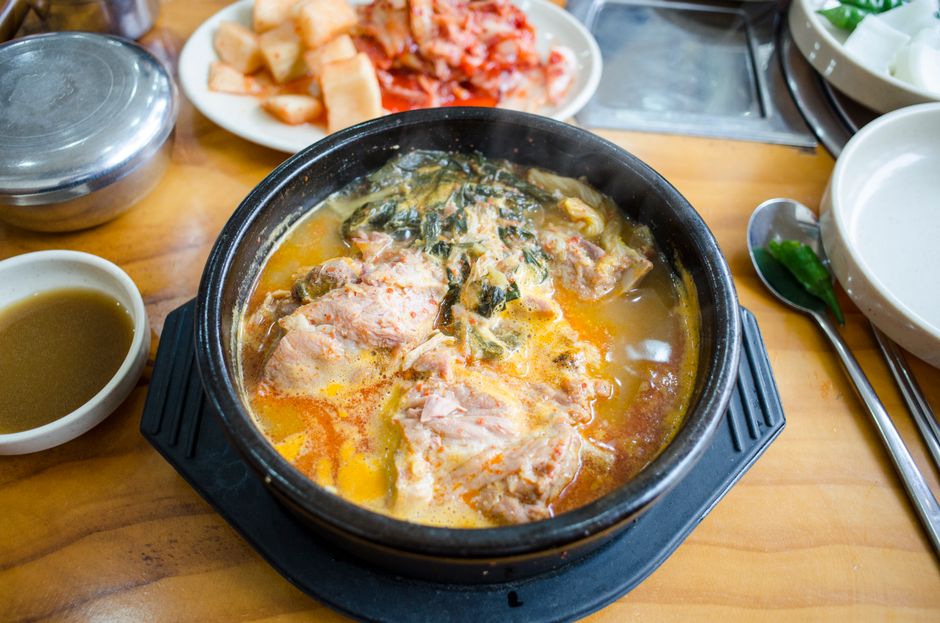
배추된장국은 재료가 단출해서 쉬워 보이지만, 의외로 순서를 틀리면 밍밍하거나 짜게 끝나버리는 국이다. 된장을 물에 바로 풀어 넣고 끓이기 시작하는 경우가 흔한데, 그렇게 하면 된장 특유의 텁텁한 맛이 남아서 뒷맛이 깔끔하지 않다.
순서는 이렇다.
멸치와 다시마로 육수 500ml를 우려낸다(급하면 시판 육수팩으로 대체 가능)
육수가 끓으면 된장 1.5~2큰술을 체에 걸러 풀어 넣는다
배춧잎 150~200g을 손으로 찢어 넣고 중불에서 3~4분 끓인다
다진 마늘 반 큰술, 대파, 청양고추 반 개를 넣고 한소끔 더 끓인다
된장을 체에 거르는 과정을 귀찮다고 생략하면 덩어리진 된장이 입에 걸려 식감이 거슬린다. 배추는 투명하게 익으면서 숨이 살짝 죽는 정도가 적당한데, 너무 오래 끓이면 배추 특유의 단맛이 날아가고 물컹해진다. 두부를 깍둑썰어 넣고 싶다면 거의 다 끓었을 때 넣는 편이 낫다. 끓는 시간이 길어질수록 두부 모서리가 뭉개져서 국물이 탁해지기 때문이다.
국물 간이 심심하다고 된장을 계속 추가하는 건 추천하지 않는다. 짠맛보다 텁텁한 맛이 먼저 올라와서 국 전체의 균형이 무너지기 쉽다. 대신 국간장을 반 큰술씩 추가하면서 간을 맞추면 깔끔하게 마무리된다. 감자나 애호박을 더해도 잘 어울리고, 냉동 새우를 몇 마리 넣으면 감칠맛이 한층 올라간다. 냉장고에 남은 자투리 채소를 정리하기에도 좋은 국이라 자주 끓이게 된다.
배추전, 얇게 두드려야 바삭하다
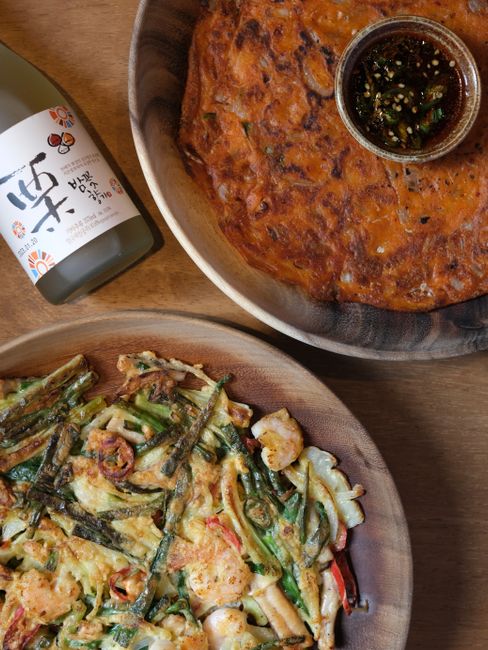
배추전은 번거로울 것 같지만 막상 해보면 세 레시피 중 가장 손이 덜 간다. 배춧잎 5~6장을 골라 밀대나 칼등으로 줄기 부분을 두세 번 두드려 납작하게 펴는 게 핵심이다. 이 과정을 생략하면 줄기 부분이 두꺼워서 속은 설익고 겉만 타는 전이 나온다.
부침가루 1컵에 물 1컵을 넣어 되직하지 않게 반죽을 만들고, 배춧잎에 소금 간을 살짝 한 뒤 반죽을 앞뒤로 얇게 입힌다. 달군 팬에 식용유를 넉넉히 두르고 중약불에서 앞뒤로 노릇하게 부치면 되는데, 센 불로 급하게 부치면 겉은 타고 속은 설익어버린다. 한 장당 2~3분이면 충분하고, 다 부친 뒤 키친타월에 잠깐 올려 기름을 빼면 느끼함이 한결 줄어든다.
양념장은 간장 2큰술, 식초 1큰술, 고춧가루 약간, 통깨만 섞으면 된다. 새우젓을 찍어 먹는 방식도 꽤 잘 어울리는데, 짭조름한 새우젓의 감칠맛이 기름진 배추전의 느끼함을 깔끔하게 잡아주기 때문이다. 입맛에 따라 골라 먹어보면 의외로 새우젓 쪽에 손이 더 가는 경우가 많다.
세 가지를 한 상에 올리면 왜 더 좋을까
겉절이는 아삭하고 자극적인 맛, 된장국은 구수하고 뜨끈한 맛, 배추전은 고소하고 바삭한 맛이다. 식감과 온도가 전혀 겹치지 않다 보니 세 가지를 한 상에 올려도 물리지 않고 끝까지 숟가락이 간다. 흰 쌀밥 한 공기, 가운데 자리 잡은 노란 배추전, 옆에 놓인 빨간 겉절이, 김이 올라오는 된장국 한 그릇. 이렇게만 떠올려도 평범한 집밥 상차림이 꽤 그럴듯해 보인다.
배추 한 포기로 세 가지를 동시에 준비해도 재료가 거의 남지 않을 만큼 효율적이라는 점도 가을철에 배추 요리를 자주 해 먹게 되는 이유다. 배추를 고를 때는 겉잎이 진한 초록색이고 속이 꽉 찬 것을 고르는 게 좋다. 들었을 때 묵직한 느낌이 드는 배추가 수분이 많고 단맛도 좋은 편이다.
자주 묻는 질문
Q. 겉절이는 냉장 보관하면 며칠까지 먹을 수 있나요? 절인 상태로 바로 무쳐 먹는 겉절이는 숙성 김치와 달리 2~3일 안에 먹는 게 가장 맛있다. 그 이상 지나면 배추에서 물이 나와 식감이 물러지니 한 번에 다 먹을 만큼만 만드는 걸 추천한다.
Q. 된장국에 배추 대신 다른 채소를 써도 되나요? 얼갈이배추나 열무로 대체해도 무방하다. 다만 배추보다 익는 시간이 짧은 채소가 많으니 끓이는 시간을 1~2분 줄이는 게 좋다.
Q. 배추전이 자꾸 눅눅해지는데 이유가 뭔가요? 반죽이 너무 묽거나 불이 약해서 기름 온도가 충분히 오르지 않은 경우가 많다. 중약불에서 기름을 충분히 달군 뒤 부치고, 다 부친 전은 겹쳐 쌓지 말고 식힘망이나 키친타월 위에 펼쳐두면 눅눅해지는 걸 막을 수 있다.
Q. 세 가지 중 한 가지만 먼저 해보고 싶다면 뭐가 제일 쉬운가요? 셋 중 하나만 고르라면 배추전부터 권하고 싶다. 재료가 가장 적고 간도 단순해서 처음 도전하는 사람도 실수할 여지가 적다. 겉절이는 절이는 시간 조절이, 된장국은 된장 거르는 과정이 변수로 작용하는 편이라 두세 번 해보면서 손에 익히는 게 좋다.
금요일 밤에 갑자기 전주행 기차표를 끊어본 적 있는가. 나는 있다. 딱히 거창한 이유는 없었다. 다음 날 일정이 비어 있었고, 날씨 앱이 맑음이라고 알려줬을 뿐이다. 문제는 그다음부터였다. 전주에 가는 건 쉬운데, 하루 안에 뭘 어떤 순서로 봐야 후회가 없는지는 아무도 제대로 알려주지 않았다.
서울에서 전주까지 당일치기가 빠듯할 것 같지만, 실제로 움직여보면 생각보다 여유가 있다. 용산역에서 KTX를 타면 전주역까지 1시간 20분에서 1시간 40분 사이, 열차 편에 따라 조금씩 차이가 난다. 아침 7시대 기차를 타면 전주역에 9시 전후로 도착하고, 거기서 한옥마을까지는 택시로 10분, 시내버스로는 20분 남짓이다. 서울에서 출발해 조선시대 한복판으로 넘어오는 데 걸린 시간이 고작 한 시간 반 남짓이라고 생각하면, 이 정도면 당일치기로 충분히 남는 장사다.
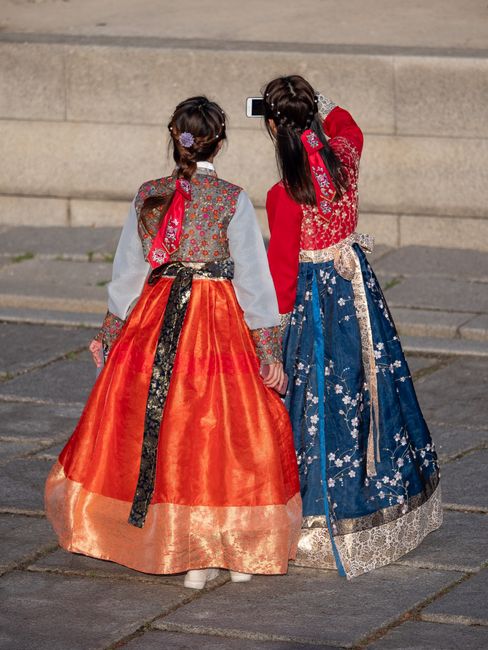
택시에서 내려 한옥마을 입구의 커다란 기와지붕 대문을 마주하는 순간, 누구나 한 번쯤 걸음을 멈추고 고민하게 되는 게 있다. 바로 한복이다. 꼭 차려입지 않아도 청바지에 운동화 차림으로 고즈넉한 돌담길을 걷는 것만으로 충분히 설레는 곳이지만, 사진 한 장 욕심이 난다면 이야기가 달라진다. 한복남 기준으로 일반 한복은 1시간 30분에 7천 원, 종일 대여는 2만 1천 원 선이고, 테마 한복은 종일 기준 3만 5천 원까지 올라간다. 한복길 쪽 테마 한복은 2시간 30분에 1만 7천 원 정도로 조금 더 저렴한 편이다. 오전 9시쯤 일찍 매장에 들어가면 사람이 적어 원하는 디자인을 먼저 고를 수 있고, 치맛자락을 살짝 쥐고 돌담길을 걷는 기분도 아침 공기가 차분할 때라야 제대로 느껴진다.
경기전, 사진보다 실제로 보면 더 차분하다
한복을 입었든 아니든 첫 코스는 경기전이다. 아래 정보만 알고 가도 동선 짜기는 끝이다.
위치: 전북 전주시 완산구 태조로 44
운영시간: 매일 오전 9시 ~ 오후 6시
입장료: 성인 3,000원 / 청소년 2,000원 / 어린이 1,000원
정문 바로 앞에서만 사진을 찍고 돌아선다면 표를 끊지 않아도 되는데, 그래도 안쪽까지 들어가 보는 걸 추천한다. SNS에서 흔히 보던 기와지붕 사진은 사실 정문 풍경이고, 안쪽으로 들어가면 조선 태조 이성계의 어진을 모신 전각과 울창한 나무들이 전혀 다른 분위기를 만든다. 입구 쪽은 사람들로 북적일 것 같지만, 의외로 경내가 넓어서 조금만 안쪽으로 들어가면 금세 한산해진다. 관람 시간은 넉넉히 잡아도 40분이면 충분하다.
전동성당, 한옥 사이에 놓인 낯선 붉은 벽돌
경기전 정문을 나와 큰길을 건너면 바로 전동성당이 보인다. 걸어서 3분도 안 걸리는 거리다. 한옥 지붕만 보다가 갑자기 붉은 벽돌과 로마네스크 양식의 돔이 등장하면 묘하게 이질적인데, 이 낯섦이 전동성당의 매력이다. 천주교 순교자들을 기리기 위해 지어진 곳이라 들어가면 생각보다 엄숙한 기운이 느껴진다. 미사 시간이 아니라면 내부 관람도 가능하니, 조용히 둘러보고 나오는 정도로 시간을 쓰면 된다.
성당 앞 계단은 한옥마을에서 손꼽히는 포토 스폿이라 평일에도 사람이 꽤 많다. 줄을 서야 할 정도는 아니지만, 각 잡고 사진을 찍으려면 사람이 뜸해지는 틈을 조금 기다려야 할 수도 있다.
점심은 한옥마을 안에서, 골목 하나만 틀어도 다르다
전동성당까지 보고 나면 어느새 배가 고파올 시간이다. 한옥마을 메인 거리에는 콩나물국밥집과 비빔밥집이 줄지어 있는데, 큰길보다는 골목 하나 안쪽으로 들어가면 줄이 훨씬 짧다. 가격대는 콩나물국밥 한 그릇에 9천 원에서 1만 원 사이, 전주비빔밥은 1만 2천 원 안팎으로 생각하면 크게 틀리지 않는다. 점심을 여기서 든든히 먹어두는 이유는 간단하다. 저녁에는 남부시장 야시장에서 먹을거리가 따로 기다리고 있는 데다, 당일치기 뚜벅이의 숙명이랄까, 하루를 다 돌고 나면 체감상 2만 보는 족히 걷게 되니 든든한 한 끼는 필수다.
오목대, 오르는 건 잠깐인데 보이는 건 전부 다르다
배를 채우고 나면 몸이 좀 묵직해지기 마련인데, 오목대로 가는 길이 딱 소화시키기 좋은 코스다. 한옥마을 안쪽 골목을 따라 느릿느릿 걷다 보면 나무 계단으로 이어지는 입구가 나오고, 여기부터 5분 정도만 오르면 정상이다. 높지 않아서 우습게 볼 수 있지만, 막상 올라가 보면 한옥마을 전체가 기와지붕의 물결처럼 펼쳐지는 풍경에 다들 걸음을 멈춘다. 고려 말 이성계가 승전을 자축했다는 이야기가 전해지는 곳이라, 표지석 앞에서 사진을 남기는 사람도 많다.
해가 조금씩 기울기 시작하는 늦은 오후에 오르면 주황빛으로 물드는 기와지붕 물결 위로 어스름한 초저녁 달이 걸리는 순간을 볼 수 있다. 일정상 시간이 맞는다면 이 타이밍을 놓치지 않는 게 좋다. 벌써 하루가 다 갔나 싶을 정도로, 풍경 하나에 아쉬운 마음이 훅 밀려드는 순간이기도 하다.
남부시장 야시장, 금요일과 토요일에만 열리는 이유
오목대에서 내려와 저녁까지 챙기고 싶다면 날짜를 잘 맞춰야 한다. 남부시장 한옥마을 야시장은 매주 금요일과 토요일 저녁에만 열리기 때문이다.
운영시간: 오후 7시 ~ 자정 (11월~이듬해 2월은 오후 6시 ~ 11시)
위치: 풍남문 건너편, 길이 약 250m 시장 통로
판매대: 이동 판매대 45개, 그중 먹거리 판매대 31개
평일에 일정이 잡혔다면 아쉽지만 야시장 대신 청년몰 쪽 상설 매장을 둘러보는 걸로 대체해야 한다. 실제로 걸어보면 숫자가 과장이 아니란 걸 바로 알 수 있는데, 전동 호떡부터 피순대, 닭강정까지 좁은 통로를 가득 채운 냄새만으로도 뭘 먼저 먹을지 고민이 깊어진다. 그중에서도 한 가지만 꼽자면 화덕에서 바로 구워 나오는 치즈 닭강정이다. 겉은 바삭하고 속은 육즙이 살아 있어서, 줄이 길어도 한 번은 기다려볼 만하다. 청년몰 쪽으로 더 들어가면 전주의 젊은 상인들이 운영하는 수제 소품점과 작은 카페들도 있어서, 먹는 것 말고도 구경할 거리가 끊이질 않는다.
사람이 많을 것 같아 걱정될 수 있는데, 실제로도 많다. 금요일 저녁 8시쯤이면 통로가 인파로 가득 차는 편이라 큰 짐을 들고 다니기엔 조금 불편할 수 있다. 캐리어는 한옥마을 내 물품보관함에 미리 맡겨두고 몸만 가볍게 움직이는 쪽을 추천한다.
돌아가는 길, 막차 시간은 미리 확인해두자
야시장에서 실컷 먹고 걷다 보면 시간이 훌쩍 지나 있다. 전주역으로 돌아갈 때는 야시장 구간에서 택시를 잡기가 까다로울 수 있으니, 풍남문 쪽 큰길까지 걸어 나와서 잡는 편이 수월하다. KTX 막차는 노선과 요일에 따라 다르지만 보통 밤 9시에서 10시 사이에 몰려 있는 경우가 많아서, 야시장 구경을 너무 늦게까지 늘리면 막차를 놓칠 수도 있다. 예매 앱으로 돌아가는 열차 시간을 미리 확인해두고, 역까지 이동 시간까지 여유 있게 계산해두는 게 마음 편하다.
하루 동안 경기전, 전동성당, 오목대, 남부시장 야시장까지 돌고 나면 다리는 뻐근해도 머릿속에는 전주의 냄새와 색이 꽤 선명하게 남는다. 당일치기치고는 밀도가 상당히 높은 하루다.
자주 묻는 질문
Q1. 한옥마을 안에서는 얼마나 걸어야 하나요?
경기전부터 전동성당, 오목대를 거쳐 남부시장까지 다 돌면 체감상 2만 보 안팎은 걷게 된다. 운동화를 신는 게 낫고, 한복을 입을 계획이라면 치마 길이와 신발을 미리 생각해두는 편이 좋다.
Q2. 비 오는 날에도 당일치기가 괜찮을까요?
경기전과 전동성당은 실내 관람이 가능해서 큰 무리는 없지만, 오목대는 계단이 미끄러워질 수 있어 날씨가 궂은 날엔 생략하는 것도 방법이다. 남부시장 야시장은 지붕이 있는 구간이 많아 비가 와도 운영되는 편이다.
Q3. 평일에 가도 야시장 분위기를 느낄 수 있나요?
야시장 자체는 금요일과 토요일에만 열리기 때문에 평일에는 운영하지 않는다. 다만 청년몰 쪽 상설 점포와 주변 식당가는 평일에도 영업하니, 야시장의 활기까지는 아니어도 전주의 저녁 풍경은 충분히 즐길 수 있다.
가을 단풍 구경 간다고 기분 내던 게 엊그제 같은데, 아침 출근길 핸들 잡은 손이 시려오는 순간이 온다. 그제야 “어, 벌써 월동준비 해야 하나” 싶어지는데, 자동차는 사람보다 추위에 훨씬 예민하다. 기온이 영상 10도 아래로 떨어지기 시작하는 순간부터 배터리 전압은 조용히 깎여나가고, 여름 내내 멀쩡하던 워셔액은 어느 날 아침 꽁꽁 얼어붙은 채로 발견된다. 한파주의보가 뜨고 나서 정비소에 전화를 돌리면 이미 늦다. 보닛 한번 열어보는 데 10분이면 충분하니, 날 풀린 이번 주말에 차근차근 점검해보자.
아침에 “으악” 소리 나기 전에: 배터리 & 단자 점검
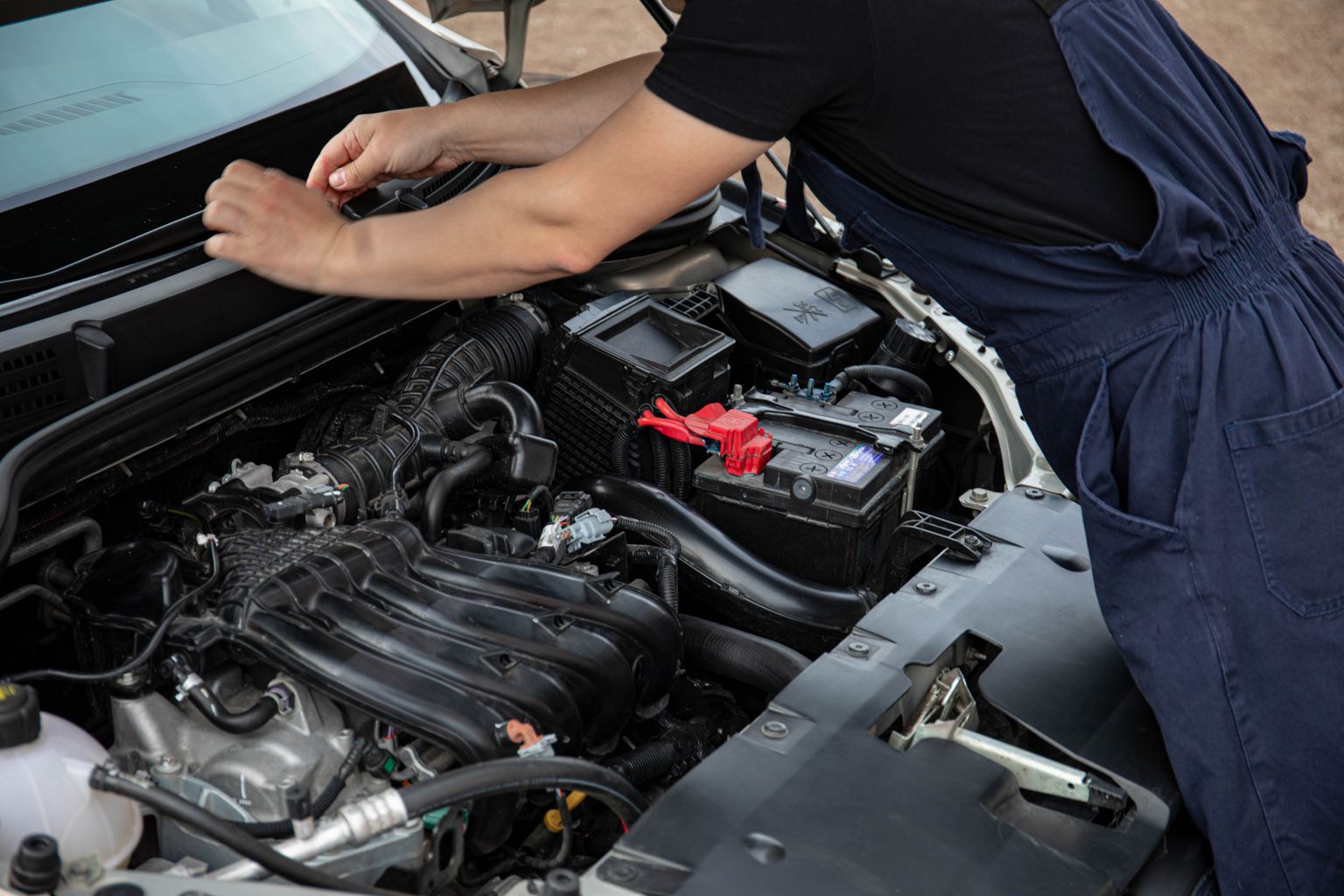
여름엔 에어컨이 배터리를 괴롭혔다면 겨울엔 히터, 열선시트, 열선스티어링, 서리제거 모드까지 전부 배터리 전력을 끌어다 쓴다. 게다가 기온이 영하 10도 정도로 떨어지면 배터리 내부 화학반응 속도 자체가 느려지면서, 여름철 대비 출력이 30~40%까지 뚝 떨어진다. 단순히 전기를 많이 쓰는 걸 넘어서 배터리 자체가 힘을 못 쓰는 계절이라는 뜻이다. 신품 배터리는 시동을 끈 상태에서 전압이 12.6V 안팎으로 측정되는데, 12.2V 아래로 내려가면 슬슬 의심해봐야 하고 11.8V를 밑돌면 한파 아침에 시동이 안 걸릴 확률이 꽤 높다고 보면 된다. 운전자 본인은 배터리 상태를 눈으로 확인할 방법이 마땅치 않으니, 카센터에서 공짜로 해주는 배터리 전압 테스트 한 번 받아보는 걸 추천한다. 배터리 사용 기간이 3년을 넘겼다면 교체를 진지하게 고민할 시점이다. “작년까지 멀쩡했으니 올해도 괜찮겠지”라고 넘기다가 하필 가장 추운 날 아침에 낭패를 보는 경우가 적지 않다.
배터리 단자에 하얗거나 푸르스름한 가루가 쌓여 있다면 전류 흐름이 방해받고 있다는 신호다. 뜨거운 물에 적신 천으로 가볍게 닦아주기만 해도 접촉 불량으로 인한 시동 불량을 상당수 예방할 수 있다. 별거 아닌 것 같지만 겨울철 긴급출동 호출 사유 1위가 배터리 방전이라는 걸 생각하면 결코 사소한 일이 아니다.
“설마 얼겠어?” 하다가 엔진룸에서 터지는 소리: 부동액 비율
냉각수에 물을 보충하다 보니 부동액 농도가 흐려져서 겨울마다 냉각수가 얼어버리는 차들이 은근히 많다. 부동액과 물의 비율은 보통 50:50이 기준이고, 한파가 심한 지역이라면 60:40까지 부동액 비중을 높이기도 한다. 이 비율대로 맞추면 영하 25도에서 영하 35도 사이까지는 얼지 않도록 설계되어 있다. 반대로 부동액 비율이 30% 아래로 떨어지면 영하 10도 정도에서도 살얼음이 생길 수 있다. 냉각수가 얼면서 부피가 팽창하면 엔진 블록이나 라디에이터에 미세 균열이 생기는 경우까지 보고되니, “그냥 물로 채워뒀는데 괜찮겠지”라는 생각은 꽤 위험한 도박인 셈이다. 보조탱크 옆면에 적힌 MIN·MAX 눈금 사이에 냉각수가 있는지, 색깔이 탁하거나 갈색으로 변하지 않았는지도 함께 봐야 한다. 색이 변했다면 교환 주기가 지났다는 뜻이니 2년 또는 4만km 기준으로 점검받는 걸 권한다.
타이어, 숫자 하나로 제동거리가 갈린다
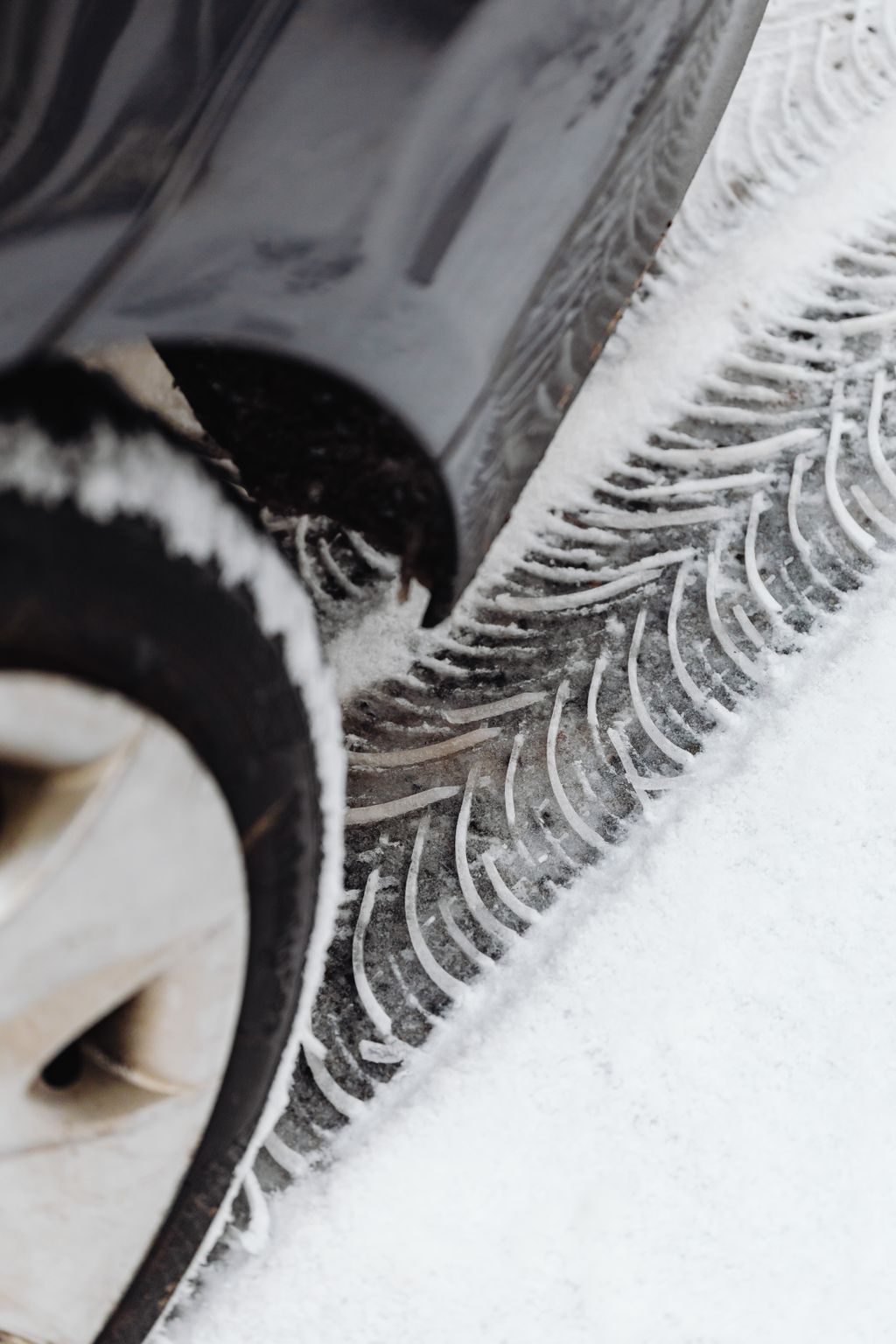
아직 괜찮다고 미뤄뒀던 타이어 교체, 사실 기준은 날씨가 아니라 기온이다. 일평균기온이 7도 아래로 떨어지면 일반 타이어의 고무가 꽁꽁 언 지우개처럼 딱딱해지면서 접지력이 눈에 띄게 떨어진다. 이 상태로 빙판길을 만나면 제동거리가 최대 20% 이상 길어진다는 테스트 결과도 있으니, 그냥 “조금 미끄럽겠지” 수준의 문제가 아니다. 완전한 겨울용 타이어로 바꾸기 부담스럽다면 최소한 구동 바퀴만이라도 트레드 깊이 3mm 이상인 타이어로 점검해두자. 트레드가 1.6mm 아래면 법정 기준 미달이고, 눈길에서는 사실상 맨들맨들한 슬릭 타이어나 다름없다.
공기압도 빼놓을 수 없다. 기온이 10도 떨어질 때마다 타이어 공기압은 약 0.1bar(대략 1.5psi) 정도 자연스럽게 낮아진다. 여름에 32psi로 맞춰뒀던 타이어가 한겨울엔 28psi까지 떨어져 있는 경우도 흔하다. 공기압이 낮으면 연비가 나빠지는 건 물론이고 빙판길에서 제동거리가 길어지는 쪽으로도 영향을 준다. 제조사 권장 공기압은 운전석 B필러나 주유구 뚜껑 안쪽에 적혀 있으니, 월 1회 정도는 주유소 셀프 공기압기로 체크하는 습관을 들이면 좋다.
앞유리가 꽁꽁: 워셔액과 와이퍼는 한 세트다
의외로 많이들 놓치는 부분인데, 워셔액에도 동결온도가 따로 있다. 여름철에 쓰던 일반 워셔액은 영하 5도 전후에서 얼어버리는 제품이 대부분이라, 겨울에도 그대로 쓰면 어느 추운 아침 워셔액 버튼을 눌렀는데 아무것도 안 나오는 상황을 맞을 수 있다. 겨울용 워셔액은 보통 영하 25도 이상에서도 얼지 않도록 만들어지니 늦가을쯤 미리 교체해두는 게 안전하다. 워셔액 탱크에 이미 여름용이 남아있다면 완전히 비우고 새로 채우는 편이 섞어 쓰는 것보다 낫다. 농도가 희석되면 동결온도가 애매해지기 때문이다.
그런데 워셔액이 멀쩡히 나와도 와이퍼 블레이드가 낡아 있으면 소용이 없다. 시야 확보의 ‘앞유리 관리’라는 공통점이 있지만 역할은 서로 다르니 둘 다 챙겨야 한다. 고무날이 갈라지거나 닦인 자국이 지저분하게 남는다면 이미 수명이 다한 것이다. 눈이 쌓인 와이퍼를 억지로 작동시키면 모터에 무리가 가니, 출발 전에는 손으로 눈을 먼저 털어내는 습관도 함께 들이자.
히터와 열선, 작동만 되면 끝이 아니다
히터 바람은 나오는데 뜨거운 바람이 아니라 미지근한 바람만 나온다면 냉각수 부족이나 히터코어 쪽 문제를 의심해야 한다. “바람은 나오니까 괜찮다”고 넘기다가 정작 한파 때 제대로 된 난방을 못 받는 운전자가 생각보다 많다. 기능별로 나눠 미리 눌러보자.
열선시트와 열선스티어링휠은 버튼을 눌렀을 때 1~2분 안에 따뜻함이 느껴지는지 확인한다. 사이드미러 열선은 작동 중 미러 표면에 서리나 물기가 빠르게 마르는지로 판단하면 된다. 앞유리 서리 제거 모드는 바람 방향이 유리 쪽으로 제대로 향하는지, 그리고 서리가 실제로 녹기 시작하는 데 걸리는 시간이 2~3분 안쪽인지 미리 테스트해두는 게 좋다. 막상 필요한 날 눌렀는데 작동을 안 하면 그날따라 더 춥게 느껴지는 법이다.
‘설마 얼겠어?’ 하다가 오도 가도 못할 때: 트렁크 비상용품
눈길에 갇히거나 배터리가 방전됐을 때를 대비한 최소한의 장비들이 있다. 거창할 필요는 없고 아래 정도만 갖춰도 웬만한 상황은 넘길 수 있다.
담요 한 장은 생각보다 쓸모가 많다. 차 안에서 오래 대기해야 하는 상황이 오면 체온 유지에 직결되기 때문이다. 점프스타터는 긴급출동 서비스 기다리느라 영하의 주차장에서 40분씩 떨 필요 없이, 스마트폰 충전하듯 내 손으로 1분 만에 시동을 걸 수 있게 해주는 구세주다. 제설스프레이나 성에제거 스프레이는 유리창이 얼어붙었을 때 몇 초 만에 시야를 확보해준다. 미끄러운 길에서 빠져나오기 위한 견인로프, 야간 작업용 손전등, 손이 시려울 때를 위한 장갑까지 챙겨두면 웬만한 돌발상황에는 당황하지 않고 대응할 수 있다. 차량용 모래주머니나 미끄럼방지매트도 오르막 빙판에서 바퀴가 헛돌 때 요긴하다.
자주 묻는 질문
겨울용 타이어, 꼭 네 바퀴 다 바꿔야 하나요?
가능하면 네 바퀴 모두 교체하는 게 맞다. 앞바퀴만 겨울용으로 바꾸면 앞뒤 접지력 차이 때문에 코너링이나 급제동 시 차체가 예상치 못하게 흔들릴 수 있다. 예산 때문에 두 짝만 바꿔야 한다면, 구동 바퀴가 아니라 뒷바퀴에 겨울용을 끼우는 게 전문가들 사이에서는 더 안전하다고 알려져 있다. 뒷바퀴 접지력이 떨어지면 후미가 미끄러지는 오버스티어가 발생하기 쉬운데, 이게 일반 운전자에게는 훨씬 대처하기 어렵기 때문이다.
부동액은 직접 보충해도 되나요?
보조탱크 눈금이 MIN 아래로 떨어진 정도라면 같은 종류의 부동액 원액과 증류수를 정해진 비율로 섞어 보충하는 정도는 가능하다. 다만 색이 다른 부동액을 섞으면 화학반응으로 침전물이 생겨 냉각라인을 막을 수 있으니, 기존에 어떤 제품을 썼는지 모른다면 정비소에서 전체 교환을 받는 편이 안전하다.
월동준비, 몇 월쯤 끝내두는 게 좋을까요?
첫 한파특보가 내려오기 2~3주 전, 대략 11월 초중순까지는 마쳐두는 걸 추천한다. 그 시기를 넘기면 정비소도 예약이 몰리고, 겨울용 타이어나 배터리 같은 인기 품목은 재고가 빠듯해지는 경우가 많다. 날이 포근할 때 미리 끝내두면 정작 추워졌을 때는 신경 쓸 일이 하나 줄어든다.
The first time I filled out a form here and saw two boxes — 성 (surname) and 이름 (given name) — already separated for me, I thought, finally, a country that gets it. Then I tried to explain the same two boxes to my mother back home over a video call, using my son’s name as the example.
I watched her eyes glaze over somewhere around “no, Mom, the family name goes first, so it’s not his middle name.” That phone call pretty much sums up what this post is about.
Korean names are not hard. The order they come in is not hard either, once you sit with it for five minutes. But almost nobody outside Korea sits with it for five minutes, and that’s how you end up with airport agents calling my son by his father’s name, hotel reservations split across two separate guest profiles, and at least one well-meaning English teacher who spent a semester calling a student “Min-jun Kim” like it was a Western name with the words swapped for flavor.
The Basic Rule: Family Name First
In a Korean name, the family name comes first and the given name comes second. Son Heung-min is a Son, first name Heung-min — not a man named Heung whose last name is Min. Bong Joon-ho, the director of “Parasite,” is a Bong. Kim Yuna, the figure skater, is a Kim. If you’ve ever seen a roster of Korean Olympic athletes and assumed the second word was the surname because that’s how it works in English, you’ve been doing it backwards the whole time, and so was I for about my first six months here.
Most Korean family names are a single syllable, and the pool of them is small — Kim, Lee, Park, Choi, and Jung alone account for roughly half the population, which is a genuinely strange thing to wrap your head around if you come from a country where surnames are practically a form of personal identification. Given names are usually two syllables, and each one is traditionally chosen for the meaning of its hanja, the Chinese character behind the sound. “Jun” (준) often carries a sense of talent or excellence, “Min” (민) tends to mean clever or quick-witted, “Ji” (지) frequently points to wisdom. Put two of those together — Min-jun, Ji-won, Seo-yeon — and you’ve got a name that’s doing real semantic work, not just a pleasant collection of syllables. Plenty of modern parents now skip hanja entirely and pick pure Korean names instead, something that would have raised eyebrows a couple of generations ago, but the two-syllable, meaning-first habit has stuck around regardless. So a typical name looks like one syllable, then two more: surname, then given name, no commas, no reordering, no exceptions for how it “sounds better” in English.
Why Family Comes First, Not Last
A naming convention can be as arbitrary as which hand you use to hold your chopsticks — just a habit, no deeper meaning. This one isn’t. The family-first order reflects something structural about how Korean society has organized identity for centuries: the lineage is the unit that matters, and the individual is a member of it, not the other way around. For most of the 20th century this wasn’t just a cultural attitude, it was written into law. Korea maintained a family registry system called hoju, where every household was recorded under a head, almost always the eldest male, and your legal identity was tied to that household on paper rather than to yourself as an individual.
That system caused real, specific harm, which is part of why it finally fell. Under hoju, a divorced mother couldn’t easily register her own children under her own name if she remarried; a child from a remarried household often couldn’t take a stepfather’s surname without a legal fight; and single mothers routinely found their children’s paperwork stamped in ways that outed their marital history to anyone who looked. Women’s rights groups spent decades pushing against it on exactly these grounds, and the hoju system was finally abolished in 2008, replaced by individual family relation registers that track each person separately rather than folding them into a household head’s file. The family-first naming order survived that reform. The legal machinery that once backed it up did not.
This isn’t unique to Korea, either. China and Vietnam follow the same family-first pattern, and Japan traditionally does too, even if Japan has increasingly flipped the order in English-language contexts since around 2019, when the Japanese government formally requested that media outlets write Prime Minister Abe Shinzo’s name as “Shinzo Abe” to match Western convention. Korea, for what it’s worth, has mostly not followed suit. Officially, the government still recommends keeping the family name first even when a name is romanized for English use — which is part of why the confusion persists. Korea asks the world to adapt to its order; much of the world just assumes it should be the other way and quietly rearranges it.
Stage Names Add a Whole Other Layer
Before we even get to paperwork, it’s worth pausing on K-pop, because it scrambles this whole system in a completely different direction. Idols often perform under a single stage name with no surname attached at all — Jungkook, IU, RM — which trains international fans to think of Korean names as single-word identities with no order to worry about. Underneath, though, the performer’s legal name almost always still follows the standard family-first structure: RM’s full legal name is Kim Nam-joon, IU is Lee Ji-eun. Fans who only ever encounter the stage name can go years without realizing a surname exists at all, which flips the usual confusion on its head. Instead of getting the order wrong, some people don’t even know there’s an order to get wrong in the first place.
What This Looks Like on Paper — and Why Even Korea Isn’t Consistent About It
If you want to see the system in its purest form, look at an Alien Registration Card, the ID issued to foreign residents like me. Mine lists my name exactly the way my passport does, Western order intact, because the government isn’t trying to convert foreigners’ names into Korean convention — it’s the reverse direction, Korean names rendered into English, that creates the mess. A Korean passport prints the surname first in the machine-readable zone at the bottom, same as every passport on earth, but on the printed data page above it, the label often reads GIVEN NAME, then SURNAME, specifically so the format matches international norms and doesn’t confuse a customs officer in Frankfurt or Toronto. So even the Korean government, in its own official documents, hedges — family-first order in Korean text, given-first order in the English rendering, sometimes on the very same page. No wonder people get confused. The document itself isn’t fully consistent.
Where it gets genuinely messy is the given name’s internal punctuation. Is it Min-jun, Minjun, or Min Jun? All three show up, sometimes for the same person on different documents, because there’s no single enforced standard for how to join or separate the two syllables of a given name in romanized form. The 2000 Revised Romanization of Korean, the government’s official transliteration system, has clear rules for converting Hangul sounds into Latin letters, but it leaves the hyphen-or-no-hyphen question largely up to the individual filling out the paperwork that day. I’ve met people who hyphenate their name on their passport but write it as one word on their business card, and when I asked one of them why, she just shrugged and said the passport office clerk typed it that way years ago and she’d never bothered to change it. That’s not a satisfying answer if you’re a Western database trying to match two records as the same person, but it’s an extremely honest one — and it means the “same” Korean name can legitimately look like three different strings of text depending on which document you’re holding.
Where the Confusion Actually Starts Abroad
In theory the fix is obvious: find the field labeled “surname” and put the family name there. The math sounds simple on paper. Reality is messier, because nearly every booking system, hotel check-in page, and online form was designed around a Western assumption that whatever a person types into the first box is their given name — no exceptions considered. So when a Korean traveler types their name the way they’ve used it their entire life, surname first, the system doesn’t ask any clarifying questions. It just files the surname as a first name and moves on, silently, and nobody notices until a boarding pass doesn’t match a passport. I’ve watched this happen to friends booking flights out of Incheon: they find out three weeks later, standing at a check-in counter at 5 a.m., being told politely but firmly that the names don’t match and someone needs to call a help desk. It’s a small thing individually. It’s also a small thing that happens to an enormous number of people, over and over, which is less a one-off mistake and more a design flaw nobody’s bothered to fix.
And it isn’t only machines doing the flipping — people do it too, usually with the best intentions. I’ve sat through introductions where a Korean colleague says their name in the correct order, family first, and the Western listener immediately parrots it back reversed, as a kind of reflexive courtesy, assuming they’re “fixing” an error that was never there in the first place. It happens so often that plenty of Koreans who deal regularly with international colleagues just preempt it themselves, introducing their names in Western order right from the start — “Call me Jun-ho Kim” instead of “Kim Jun-ho” — not because that’s how their name actually works, but because it’s one less thing to correct in a meeting that’s already running long. Which, if you think about it, is a strange kind of accommodation: the burden of avoiding confusion lands almost entirely on the Korean speaker, not on the system that keeps getting it wrong.
So What Should You Actually Do With a Korean Name?
If you’re filling out a form for a Korean colleague, client, or friend, the safest move is also the simplest: ask which part is the family name rather than guessing based on word order, especially if the name has already been flipped somewhere upstream and you can’t tell anymore which version you’re looking at. If you’re writing a name in running English text and the person hasn’t told you otherwise, keeping the traditional order — family name first — is the more respectful and more accurate default, even if it occasionally confuses a reader who assumes otherwise; a short clarifying note on first mention, the way journalists do, solves it without erasing the actual structure of the name. And if you’re the one introducing yourself, it’s entirely your call how you want to present it. Plenty of Koreans flip the order for international convenience and plenty don’t, and neither choice is wrong. The name itself doesn’t change. Only the order you’re reading it in does.
Frequently Asked Questions
Is it rude to get the order wrong?
No, and most Koreans won’t take offense if you mix it up, especially on a first meeting — it happens constantly and everyone here has made peace with it. That said, getting it right on something that actually matters, like addressing a business letter or introducing a colleague at a conference, does register as a small sign that you paid attention, and people notice that more than you’d think.
Do Korean married couples share a family name?
Not automatically, and this surprises a lot of foreigners. Korean women traditionally keep their own family name after marriage rather than taking their husband’s, a practice rooted in the same lineage-based logic that puts the family name first — you belong to the family you were born into, not the one you married into, at least not on paper. Children usually take the father’s surname by default, but since the 2008 reform, parents can actually agree at the time of marriage registration to give children the mother’s surname instead, and a small but growing number do. It’s still far from the norm, but it’s no longer the legal non-option it used to be, which is a bigger shift than it might sound like given how recently the old household-head system was still in force.
How can I tell which part of a Korean name is the surname if it’s already been flipped on a form?
When in doubt, check against the handful of extremely common single-syllable surnames — Kim, Lee, Park, Choi, Jung, Kang, Cho, Yoon, Jang, and Lim cover a large share of the population — and if one of those words appears anywhere in the name, it’s very likely the family name regardless of which position it’s sitting in. It’s not a perfect method, but it catches the majority of cases, and when it doesn’t, just ask.
The first time someone held a soju bottle out to me with both hands and a small, almost ceremonial bow, I did the only logical thing: I reached over and grabbed it with one hand, like I was passing the ketchup. The table didn’t erupt or go silent in some dramatic movie way — it was smaller than that, and somehow worse. A colleague’s hand drifted toward mine half a beat too late, as if to intercept it, then pulled back. Someone else suddenly found their phone very interesting. Nobody corrected me out loud, because that’s not really how it works here; you’re just left holding a slightly too-heavy silence along with the bottle. I had failed a test I didn’t know I was taking, and I’d go on to fail it, in smaller forms, for another year or two before the rules finally clicked. So let’s get the real question out of the way first, since it’s the one everyone searches at 11pm after an awkward company dinner: is it actually rude to refuse alcohol in Korea? The honest answer is “it depends” — which sounds like a cop-out until you realize that in Korea, the depends usually comes down to exactly one thing: who’s holding the bottle.
Why the Question Isn’t as Simple as It Looks
Korea doesn’t have a single, uniform drinking culture so much as a layered one, where the layer that matters most is context. Refusing a beer at a casual dinner with friends your own age barely registers as an event. Refusing a shot poured by your department head at a hoesik (회식), the semi-mandatory company dinner, is a completely different ecosystem, and conflating the two is where most explainer articles go wrong. They’ll tell you “just say no politely” as if the social physics are identical in both rooms. They aren’t. The pressure in Korean drinking culture isn’t really about alcohol at all — it’s about hierarchy, relationship-building, and face. Alcohol just happens to be the vehicle everyone’s agreed to use.
That’s worth sitting with for a second, because it reframes the whole topic. If you think of a hoesik as “a dinner where people drink,” the etiquette feels arbitrary and faintly absurd. If you think of it as “a ritual where seniority, trust, and group belonging get performed,” the pouring, the toasting, and yes, even the mild pressure to drink start to make a lot more sense. There’s actually a word for the skill this all runs on: nunchi (눈치), loosely “the ability to read a room,” though that translation undersells it. Nunchi is knowing, without anyone saying it, that the junior manager three seats down is nursing a bad week and needs the senior director to notice; it’s knowing exactly how long you can let your glass sit full before it starts to look like a statement. Koreans grow up absorbing this instinctively. Foreigners usually have to learn it the hard way, glass by awkward glass, the way I did. None of that means you’re obligated to get drunk. It means the stakes of how you decline are higher than they’d be at a backyard barbecue in, say, Ohio.
The Rules Nobody Explains Out Loud
Because those stakes are rooted in physical choreography rather than written rules, the etiquette can feel like a minefield if nobody’s ever walked you through the basic moves — and almost nobody does, because Koreans themselves absorbed it as children, not from a list. You don’t pour your own drink in Korea. Ever, really. Someone else pours for you, and you pour for them; it’s a small act of mutual care, and doing it yourself is read as either oblivious or, in older superstition, a little unlucky, a bit like opening an umbrella indoors. When you pour for someone senior to you, you use two hands on the bottle, or at minimum steady your right forearm with your left hand. When they pour for you, you hold your glass with both hands to receive it. And when you actually drink in front of an elder or a senior colleague, you’re supposed to turn your head slightly away and cover your glass with your hand, taking the sip somewhat out of their direct line of sight.
I’ll admit this last one felt the most theatrical to me when I first learned it, like I was being asked to perform a magic trick with a shot glass. But once you’ve seen a table full of Koreans do it without a second thought — fluidly, almost invisibly — you realize it’s not performance at all, it’s muscle memory, the same way covering your mouth when you yawn is muscle memory and not a grand statement. Nobody at the table is thinking about it. You’re the only one thinking about it, which is exactly why it feels so loud when you get it wrong.
And this is where the actual mechanics of refusal live, before you ever say a word. Holding your hand lightly over the mouth of your glass when someone comes around with the bottle, paired with a small smile and “gwaenchanayo” (괜찮아요, roughly “I’m fine, thanks”), is instantly understood and almost never pushed back on. It’s a gesture, not a negotiation — the Korean equivalent of putting your hand over your coffee cup when the waiter circles with the pot a second time. Nobody takes offense at that in a diner in the US, and nobody really takes offense at this either, as long as you do it before the bottle tips, not after.
Hoesik: Where the Real Pressure Lives
If there’s one word that explains most of the anxiety behind this topic, it’s hoesik. Literally “gathering to eat,” it’s the Korean institution of the company dinner, and it’s where generational tension around drinking is most visible. Traditionally a hoesik runs in rounds — 1차 (il-cha) is the main dinner, often with grilled meat and soju; 2차 (i-cha) might move to a bar or a noraebang (karaoke room); a determined group might stagger into 3차 near midnight. Refusing to show up at all used to be nearly unthinkable for a junior employee. Refusing to drink once you were there used to carry real social cost — not fired-the-next-day cost, but the quieter cost of being read as someone who doesn’t quite fit the team.
Here’s the part that surprised me, though, and it’s the part a lot of older explainer posts miss because they were written five or six years ago and the culture has genuinely moved since then: hoesik itself has been shrinking, and not by a small margin. Companies have been actively dialing it back, partly because of changing labor norms, partly because younger employees have simply pushed back harder than their predecessors ever did. Job-platform surveys in Korea have run this question for years, and the trend line only moves one direction: a clear majority of office workers, year after year, now say they’d prefer a hoesik with no alcohol at all, or no multi-round structure at all. The lunchtime hoesik — 점심 회식, “point lunch” in office slang — has become a real fixture precisely because it ends by 1pm with nobody slurring their words back at their desk. I don’t think that shift gets enough airtime in English-language explainers, which still tend to describe hoesik like it’s 2008, all rounds and regret.
Still, “shrinking” isn’t “gone.” If you work at a more traditional company, or in an industry with a stronger hierarchical culture — construction, some legacy manufacturing firms, certain government offices — you’ll still encounter the old rhythm fully intact, rounds and all. Context really does the heavy lifting here, which is a long way of saying: ask a Korean coworker, quietly, what your specific office is actually like before assuming either extreme.
So How Do You Actually Say No?
Beyond the physical gesture of covering your glass, in practice nobody expects a dissertation when you want to put the verbal version of “no” on record. A short, calm reason works better than an elaborate one, mostly because elaborate excuses invite follow-up questions you don’t want to answer at a dinner table. “저는 오늘 술 안 마실게요” (I won’t be drinking today) is clean and final. “약 먹고 있어서요” (I’m on medication) shuts the conversation down almost instantly, because health trumps hierarchy in Korean social logic — nobody is going to pressure a person who says they’re on medication, and frankly, pushing past that would make the pusher look bad, not you. Driving works the same way. Pregnancy works the same way, obviously. Religion is understood, if occasionally met with a raised eyebrow depending on the crowd. “I don’t drink,” offered as a flat personal statement with no excuse attached, is accepted more and more, especially among younger Koreans, though it can still draw a surprised “really, not even one?” from an older relative who grew up in a very different Korea.
One popular workaround you’ll see recommended online deserves a specific warning, though, and it belongs right here in the “how to say no” conversation rather than off to the side: discreetly dumping your drink under the table, into a nearby plant, or into your water glass when nobody’s looking. It’s often framed as a harmless shortcut that avoids the awkwardness of saying no out loud. But it’s also a small act of deception at a table literally built around the ritual of mutual pouring and watching out for each other, and if you get caught — and people do get caught — it reads far worse than a plain refusal would have. A polite “no” costs you nothing. A discovered trick costs you the trust the whole evening was meant to build.
What’s Actually Changing
The most interesting part of living here long-term isn’t the old rules — plenty of guides cover those — it’s watching them erode in real time, year by year. Non-alcoholic soju and beer have gone from novelty items to genuine shelf staples; Hite-Jinro and Lotte Chilsung, the two giants that between them make most of the soju sold in this country, now both sell 0.0% versions of their flagship brands sitting right in the convenience store fridge next to the real thing, which would have looked like a strange marketing stunt a decade ago. “MZ세대” (the Korean shorthand for Millennials and Gen Z, used constantly in local media and occasionally as a mild generational jab) gets blamed or credited, depending on who’s talking, for normalizing a flat “저는 안 마셔요” (I don’t drink) with zero justification attached. Nobody owes the table a medical note anymore, and that’s a genuine shift from the culture even ten years ago, when “I just don’t want to” would have sounded almost confrontational, a quiet refusal of the whole social contract rather than a personal preference.
Even labor policy has nudged things along. Regulators have weighed in on whether a late-running, compulsory-feeling hoesik counts as compensable work time, which, predictably, made HR departments think twice before expecting anyone to stay for round three. None of this means Korean drinking culture has disappeared — soju remains the best-selling liquor on earth by volume, and toasting rituals aren’t going anywhere soon — but the old idea that you must drink to belong is noticeably weaker than it used to be, and it gets a little weaker every year I’ve been here.
If I had to boil down a decade of watching this up close into one piece of advice, it’s this: the form matters more than the content. How you decline — calmly, with the right small gesture, without making the person pouring feel rejected — matters far more than whether you decline at all. Koreans I know who don’t drink at all, for religious or personal reasons, hold respected positions and get invited to every hoesik anyway, nunchi fully intact, no questions asked after the first one. The people who actually get talked about the next morning are the ones who make a scene in either direction — the ones who refuse loudly and self-righteously, like they’re scoring a point, or the ones who get sloppily, aggressively drunk and make everyone else’s night harder. The quiet middle, where you show up, you’re gracious, and you drink exactly as much or as little as you genuinely want, is where almost everyone actually lives, foreigner or not.
Frequently Asked Questions
Is it rude to refuse a drink from your boss in Korea?
Not inherently, as long as you decline gracefully rather than bluntly. A hand lightly covering your glass, a small smile, and a simple “gwaenchanayo” (I’m fine) is almost always enough. What can come across poorly isn’t refusing itself, it’s refusing in a way that seems to reject the gesture of being poured for, since the pour is really an offer of goodwill. Accept the goodwill, decline the liquid, and you’re fine.
Will people think I’m unsociable if I never drink at hoesik?
Less and less, especially in offices with younger staff or in Seoul generally, where attitudes have shifted fastest. You’ll build rapport just as well by showing up, eating, and engaging in conversation as by drinking. That said, in more traditional or older-skewing workplaces, showing up consistently and staying for at least part of the evening still matters more than whether there’s alcohol in your glass.
What should foreigners specifically watch out for?
Mostly the small mechanics: don’t pour your own drink, use two hands when pouring for someone senior, and don’t be alarmed if someone turns away slightly to drink in front of you — it’s respect, not rudeness. Getting these details right tends to earn more goodwill than perfect Korean ever would, because it signals you’ve actually paid attention rather than just passed through.
The Holiday That Shuts Down a Country of Fifty Million People
The first time I understood Chuseok, I wasn’t at a family table or watching a ritual. I was standing in an empty subway car in Seoul on a Thursday afternoon, the kind of emptiness that in any other city would make you check your phone for an emergency alert. There wasn’t one. There was just Chuseok, Korea’s biggest holiday, and everyone who could leave the city already had.
If you look up Chuseok online, you’ll almost always see it translated as “Korean Thanksgiving” — a tidy shorthand that quietly flattens a much heavier, stranger holiday underneath it. It’s not a secular feast with a vague theme of gratitude. At its core, Chuseok is an agricultural reckoning with your own ancestors: a formal, ritualized thank-you to specific dead relatives for the harvest you’re about to eat. Once you get past the surface cheerfulness — the rice cakes, the hanbok, the family photos — it’s also one of the best windows into how Korean families actually work: the obligations, the hierarchy, the quiet tension, and the real warmth that coexists with all of it.
So What Exactly Is Chuseok?
Chuseok falls on the 15th day of the 8th month of the lunar calendar, which is why the date jumps around on the Western calendar every year — in 2026 it lands on September 25th, with the official holiday running from the 24th through the 26th. Because it’s tied to the full moon rather than a fixed solar date, you can’t just memorize “late September” and move on; some years it slides into early October. The name itself breaks down nicely: “chu” means autumn, “seok” means evening, so at its root Chuseok is simply “autumn evening,” a nod to the harvest moon the whole holiday orbits around.
It’s also called Hangawi, an older native Korean word meaning roughly “the great middle of autumn,” and it sits alongside Seollal (Lunar New Year) as one of the two biggest holidays on the calendar. If Seollal is about starting the year right, Chuseok is about closing the harvest out right — giving thanks for the crops, honoring the ancestors who made this year’s abundance possible, and, not incidentally, making sure every branch of the extended family sees each other at least once before winter.
The Ancestors Come First — Literally
This is the part that surprises a lot of newcomers: Chuseok isn’t really a harvest festival for the living first. The centerpiece is charye, a memorial rite performed for deceased ancestors, usually going back two to four generations. Families set a low table — the jesang — according to rules so specific they have their own four-character proverbs. Jwapo-ucheo, for instance, dictates that dried fish goes on the left and fresh fruit on the right; eodu-dongmi places the fish head pointing east. Red fruits go east, white fruits go west. None of this is improvised, and in most families, whoever is in charge of setting the table that year is expected to simply know it, or get quietly corrected by an aunt who does.
The family bows in a specific order — oldest son first, typically, which tells you a lot about how Korean family hierarchy still runs through holidays even in 2026. After the rite at home, many families also do seongmyo: visiting the ancestors’ actual graves to clear weeds and lay out food again, a kind of maintenance visit for the dead. I’ll admit that as an outsider, watching this the first time felt less like a holiday tradition and more like attending a very calm, very organized family funeral rehearsal. It isn’t morbid in practice, though — it’s closer to a formal “thank you,” addressed to people who aren’t around to hear it out loud anymore.
What tourists rarely get to see is this part at all. Charye happens inside homes, not in public squares, so unless you’re invited by a Korean friend or colleague, you’re more likely to encounter a reconstructed version in a folk museum than the real thing. That’s worth knowing if you came to Korea expecting a Mardi-Gras-style street spectacle — Chuseok’s real center of gravity is indoors, around a table, not outdoors in a parade.
The Food: Songpyeon and the Rest of the Table
If there’s one food non-Koreans should know by name before Chuseok, it’s songpyeon — small, half-moon-shaped rice cakes stuffed with sesame seeds, chestnuts, sweetened mung bean, or black beans, then steamed over a bed of pine needles, which is where the dish gets its faint, specific pine fragrance. There’s a bit of folklore attached: it’s said that whoever shapes the prettiest songpyeon will have a beautiful daughter or a good spouse, which is exactly the kind of charming pressure you’d expect a culture to invent around a food made by hand, in bulk, by the women of the family, while everyone else watches television in the next room.
That division of labor isn’t just a mild inconvenience, either — it has a clinical name, which I’ll get to in a moment. First, the rest of the table: japchae (stir-fried glass noodles with vegetables and beef), jeon (an umbrella term for various pan-fried fritters — zucchini jeon, fish jeon, meat jeon, you name it), galbijjim (braised short ribs), and sikhye, a sweet rice punch usually saved for dessert. None of this is quick food. A full Chuseok spread for an extended family can take a full day or two of shopping and cooking to produce, which is exactly why the holiday has become shorthand in Korea for both “warm family reunion” and “exhausting unpaid domestic labor,” often in the very same sentence.
Myeongjeol Jeunghu-gun: The Holiday Stress Is a Documented Thing
Here’s something that rarely makes it into the breezier tourist guides: Korea has a semi-official name for the physical and emotional toll Chuseok and Seollal take on people, especially daughters-in-law — myeongjeol jeunghu-gun, literally “holiday syndrome.” Hospitals and news outlets report a real uptick in stress-related complaints, back pain, and family conflict around both holidays, enough that it’s treated as a recognizable seasonal pattern rather than a joke. Divorce filings even tick up in the weeks after Chuseok and Seollal, a statistic Korean media reports on with a kind of grim regularity every year.
I bring this up not to paint Chuseok as miserable — it genuinely isn’t, for most families, most years — but because I think foreigners get an incomplete picture if they only hear about songpyeon and full moons. The tension is baked into the structure of the holiday itself: daughters-in-law traditionally cook for the husband’s side of the family, in-law dynamics get compressed into 72 hours of close quarters, and the question of who visits whose family first, and for how long, is negotiated — or fought over — in households across the country every single year. It’s not unlike the mix of love and low-grade dread a lot of people feel about their own big family holidays anywhere else, just with more ritual structure wrapped around it, and a name for the resulting headache.
The Great Migration: Korea’s Biggest Traffic Jam
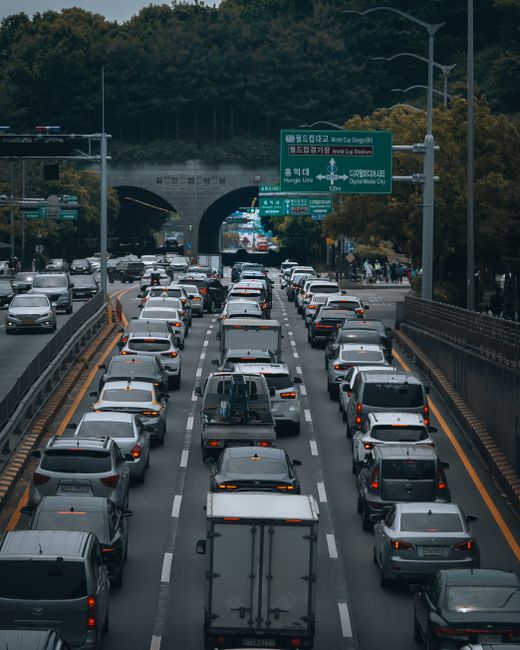
Then there’s the logistics, which deserve their own section because they are genuinely wild if you’ve never seen it. Every Chuseok, Korea’s transport ministry reports tens of millions of trips being made as people leave the cities where they work and head back to their hometowns — a mass movement Koreans call gwiseong gil, the “homecoming road.” A drive that normally takes about three hours from Seoul to Busan can stretch to eight, nine, sometimes closer to twelve hours, as the highways turn into slow-moving parking lots broadcast live on the evening news every year, almost as a ritual of its own, complete with a helicopter shot of the exact same overpass that’s jammed every single year.
If you’re a foreigner living in Korea, this is the part you’ll feel most directly, even if you’re not Korean yourself. Your local market closes. Your favorite little restaurant closes. Half your coworkers vanish for the better part of a week. Large chains, department stores, and tourist-facing palaces generally stay open and even run special programming for visitors, so it’s not like the country becomes unusable — but the texture of daily life changes noticeably, and if you need a specific small business to be open on Chuseok day itself, you should check ahead rather than assume.
Oddly enough, this is also when Seoul becomes one of the most pleasant cities in the country to simply walk around in. With a huge chunk of its usual population sitting in highway traffic somewhere else, the city empties out noticeably — Gyeongbokgung Palace, normally shoulder-to-shoulder with tour groups, gets quiet enough that you can actually read the signage, and a neighborhood like Hongdae, usually loud even on a Tuesday morning, turns strangely calm. Tourists who time a trip for Chuseok week, rather than avoid it, often end up pleasantly surprised, as long as they’ve checked which specific sites and restaurants are closed for the holiday itself.
Hanbok, Moonlight, and Old Folk Traditions
Once the rites are done and the roads have, eventually, delivered everyone home, Chuseok does turn into something lighter. Hanbok comes out, especially for kids and for photos — not the full formal version most people wear maybe twice a year, but still a deliberate, dressed-up touch that marks the day as different from an ordinary Tuesday. Moon-watching is a real, intentional activity: Chuseok falls on a full moon by design, and there’s a tradition of making a wish while looking at it, which is about as universally human a gesture as I can think of, regardless of which country you’re standing in.
In some regions, particularly around the southwestern coast, you’ll still find ganggangsullae — a circle dance performed by women under the full moon, singing as they go, said to date back centuries, possibly used historically as a kind of decoy to make a village look more populated than it was during wartime. Whether or not that origin story is strictly accurate, it’s a genuinely beautiful thing to watch if you happen to catch a performance, and it’s one of the few Chuseok traditions that does play out in public, at folk villages and cultural festivals, rather than strictly behind closed doors.
The Gift-Giving Season: Spam, Fruit, and Pyramids of Boxes
There’s also the gift-giving, which foreigners living and working in Korea will notice almost immediately once September arrives: elaborately boxed sets of Spam, cooking oil, toothpaste, or premium fruit start appearing in every convenience store and department store lobby, stacked into pyramids like a strange, savory Christmas display. Spam specifically has an odd pedigree here — it arrived with the U.S. military after the Korean War, was scarce and expensive for decades afterward, and somewhere along the way flipped from “wartime ration” into a genuine status gift, now sold in sleek gold-and-navy gift boxes that look more like they belong in a jewelry case than a pantry.
These seonmul sets are given to coworkers, employees, landlords, and relatives, and the range runs from a ten-dollar box of canned ham to genuinely eye-watering luxury fruit gift sets that can run into the hundreds of dollars, the kind with a single perfect melon resting on velvet-style padding. If you work for a Korean company, there’s a decent chance you’ll receive one yourself, which is a nice, slightly surreal welcome to the season — and a pretty good conversation starter with coworkers who are usually happy to explain the unspoken rules of who gives what to whom.
Whether you end up dodging empty streets in Seoul, watching a highway traffic report with genuine disbelief, or just unwrapping an unexpected box of Spam from a coworker, Chuseok has a way of showing you Korea at its most unguarded — tired, sentimental, overfed, and briefly, deliberately, slowed all the way down.
FAQ
Is Chuseok the same as Lunar New Year (Seollal)?
No, though they’re often confused by outsiders because both involve travel, ancestral rites, and family gatherings. Seollal falls on the first day of the lunar year, usually in late January or February, and centers on starting the new year properly — new clothes, New Year’s bows (sebae) from children to elders, and rice cake soup (tteokguk). Chuseok falls in autumn, centers on the harvest and the full moon, and leans more heavily on songpyeon than any other single food. Both are major holidays with similar travel chaos, but they’re distinct occasions with different symbolism.
Can tourists actually do anything during Chuseok, or does Korea just shut down?
Tourists can absolutely still visit — in fact, many enjoy it more, since the usual crowds thin out dramatically as locals head to their hometowns. Major palaces, folk villages, and some museums often run special Chuseok programming, including free admission days at royal palaces for visitors in hanbok. Smaller, family-run restaurants and local markets are the ones most likely to close, so it’s worth checking opening hours for anything specific you want to visit or eat, rather than assuming everything will be running as normal.
Do I need to bring a gift if I’m invited to a Korean friend’s home for Chuseok?
It’s a thoughtful gesture, though not a strict requirement for a foreign guest the way it might be for a Korean relative. A modest, nicely packaged gift — fruit, traditional sweets, or a boxed gift set similar to what you’ll see sold everywhere in September — is the safest choice. Showing up empty-handed won’t be seen as a grave insult for an invited guest, especially a foreign one, but bringing something small signals that you understand and respect the spirit of the occasion, which tends to go a long way.
The First Time I Watched a Stranger Eat Noodles for an Hour
The first time I actually sat through a full mukbang, I wasn’t trying to. I was in a waiting room at a pediatric clinic in Seoul, half-asleep, and the TV bolted to the wall was tuned to a cable channel where a young woman was working her way through what looked like four servings of jjajangmyeon, two servings of tangsuyuk, and a liter of cola, narrating the whole thing between bites. Nobody else in the room seemed to find this remarkable. My daughter was the only person watching the screen with any real curiosity, and even she lost interest before the host did. That, more than anything, told me mukbang isn’t a novelty act here. It’s furniture.
The premise still sounds odd the first time you say it out loud — people watching other people eat, sometimes for an hour at a stretch, sometimes daily, sometimes while eating their own dinner in front of the same screen. But once you’ve lived here a while, the “why would anyone watch this” question stops mattering, because you start noticing how deeply the format is wired into ordinary Korean life: television, YouTube, convenience store shelves, even how some restaurants arrange their seating. I want to actually explain that, piece by piece, rather than just describe it from the outside.
What “Mukbang” Actually Means
Mukbang (먹방) is a portmanteau of meongneun (먹는, “eating”) and bangsong (방송, “broadcast”). That’s the whole etymology — eating, broadcast. The host is traditionally called a BJ, short for “Broadcast Jockey,” a term borrowed from Korean radio culture that existed long before YouTube did. A mukbang isn’t just footage of someone eating; it has a loose but recognizable grammar to it. There’s an opening greeting to the audience, a reveal of the food laid out for the camera like a trophy — often an amount no single person should reasonably finish — and then the eating itself, usually paired with either constant chatter or near-total silence except for the sound of chewing.
That silent option grew into its own branch of the genre, and it’s worth treating as a sister format rather than a footnote: ASMR mukbang, where microphones are placed close enough to pick up every crunch, slurp, and swallow. Described in a sentence, it sounds unpleasant. In practice, a lot of viewers find it strangely calming, the same mechanism that makes some people fall asleep to rain sounds or keyboard-typing videos. I still don’t fully get the appeal myself, even after years of living next to it, but I’ve stopped pretending it’s a fringe taste — some of the biggest mukbang channels in the country are built almost entirely around sound design rather than personality.
Where It Actually Started
The format traces back to around 2009 on AfreecaTV, a Korean live-streaming platform that predates Twitch by several years. AfreecaTV had already built a donation economy around “star balloons,” a virtual currency viewers buy and send to streamers in real time, which the streamer can later cash out. Eating on stream turned out to be a low-barrier way to hold an audience for a long session — no special skill required, just a camera, a table, and an appetite — and the donation model meant a popular host could make a genuinely good living by eating dinner in front of a webcam. The format migrated to YouTube around the mid-2010s, where it found a far bigger international audience, and by roughly 2018 it had become a recognizable global genre rather than a Korean curiosity people stumbled on by accident.
The Loneliness Behind the Feast
It’s worth pulling this apart from the platform history, because the “why Korea” question has its own answer, separate from AfreecaTV’s business model. Korea has one of the more communal eating cultures in East Asia — meals function as social infrastructure, not just fuel, and a surprising number of restaurant menus still assume a table of two or more splitting dishes. Eating alone in public, called honbap (혼밥, literally “alone meal”), carried a mild social stigma for a long time; some restaurants genuinely weren’t set up for solo diners, down to the seating itself facing outward in rows rather than at shared tables.
Mukbang, in its earliest form, filled a specific gap in that setup: people eating alone at home who still wanted the feeling of a shared meal, even a one-sided, parasocial version of one. You get company without the obligation of conversation, noise without small talk. It’s an odd fix for loneliness when you lay it out like that, and I’m not going to pretend it’s a healthy substitute for actual company. But it’s not an irrational one either, and that distinction matters if you’re trying to understand the genre instead of just gawking at it.
The Business Behind the Bite
It would be easy to assume mukbang stayed a niche, ad-supported hobby, but the economics outgrew that framing years ago. Top Korean mukbang creators earn through a mix of platform ad revenue, live-stream donations, and increasingly, brand sponsorships from food delivery apps and restaurant chains eager to get their product in front of a captive, hungry audience. Tzuyang, probably the best-known mukbang creator working today, has built a channel with billions of combined views across her videos — a scale that puts her well outside “internet hobbyist” territory and squarely into mainstream media personality, with the sponsorship deals to match. Watching a creator unbox a specific brand of instant noodles or a chain’s new limited-time menu item isn’t incidental; it’s paid placement dressed up as spontaneous indulgence, and convenience store chains like GS25 and CU have both run limited-edition snack collaborations built around a particular creator’s face and catchphrase.
None of that makes the content fake, exactly. Most hosts really are eating what’s on screen, and really are hungry when the camera starts rolling. But it does mean the “just a regular person eating dinner” framing is doing some quiet work. There’s a production logic underneath the casual tone — camera angles chosen to make the food look more generous than it is, pacing edited so a two-hour shoot becomes a twenty-minute video, and a host who has, in many cases, done this thousands of times and knows exactly how to make a bite look satisfying on camera rather than just functional.
How Do They Actually Eat That Much?
This is the question I get asked most by friends back home, and it deserves a real answer instead of a shrug. Most established creators film in long, broken-up sessions rather than one unbroken sitting — pausing the stream, resting, sometimes spacing the “meal” out over several hours even though the final edit compresses it into something that looks continuous. Some of what looks like a single enormous plate is genuinely eaten across that stretched timeline; some of it is managed through smaller real bites combined with camera angles that exaggerate portion size. A handful of creators over the years have faced public accusations of using tricks — hiding food, spitting discreetly, or simply not finishing what the camera implies they finished — and those accusations have occasionally ended careers when they stuck. I’d treat any single viral claim about a specific creator with some skepticism rather than assuming it describes the genre as a whole; the honest answer is that it varies a lot by channel, and nobody outside the room actually knows for certain what happened in someone else’s two-hour shoot.
The Health Conversation Nobody Fully Resolves
I want to be careful here, because this is the part of the mukbang conversation that gets oversimplified in both directions. In 2018, South Korea’s Ministry of Health and Welfare included binge-eating broadcasts in a broader national obesity-management plan, explicitly naming mukbang-style content as something worth monitoring alongside other contributors to rising obesity rates. That was a policy footnote, not a ban, and nothing close to a crackdown followed — but it’s a real, documented moment, not an urban legend, and it tells you the conversation isn’t purely a foreign observer’s anxiety projected onto Korean entertainment. At the same time, individual creators have made their own claims over the years about fast metabolisms, specific diets, or how they manage the sheer volume of food they eat on camera, and I’m not going to repeat any of those as settled fact, because none of us watching from outside actually know what’s true for a given person’s body or habits. What I will say plainly is that the genre normalizes a scale of eating that is, by definition, not typical. Viewers can enjoy the spectacle of it without mistaking it for a menu plan, and most people here do exactly that without needing to be told.
What It’s Actually Like to Encounter in Daily Life
Outside the phone screen, mukbang has leaked into the physical texture of Korea in ways that caught me off guard when I first noticed them. Convenience stores sell “mukbang-size” instant noodle bowls, sometimes packaged with a specific creator’s likeness on the sleeve. Some restaurants have an actual designated seat near a window or corner, angled for filming, because enough customers film their own meals there that it’s worth designing around. Delivery apps run promotions timed to when popular mukbang streams go live, on the fairly reasonable theory that watching someone eat fried chicken at 11 p.m. makes you want fried chicken at 11 p.m. I’ve ordered that fried chicken. It worked on me too, which was a humbling thing to admit out loud to my wife.
What struck me most, though, is how unremarkable all of this feels to people who grew up with it already running in the background. For a lot of Koreans under maybe forty, mukbang was just always there — playing on a phone propped against a water bottle during a solo lunch, as ordinary a genre as a cooking show is anywhere else. The “why would you watch this” reaction turns out to be almost entirely a foreigner’s question, mine included, back when I first saw it on that clinic TV. I don’t ask it anymore. I just notice where it’s playing next — the dentist’s waiting room, the gym locker room TV, a coworker’s phone propped up at lunch — and move on, the way you’d stop registering a radio station that’s always on somewhere in a building.
FAQ
Is mukbang still popular in Korea, or has it faded?
It’s shifted rather than faded. The pure “watch a stranger eat an enormous amount of food” format has leveled off somewhat as a novelty, but it’s splintered into healthier-eating mukbang, cooking-plus-eating hybrids, and ASMR-only channels, so the overall category is arguably bigger than ever, just less monolithic than it was around 2015 to 2018.
Is mukbang uniquely Korean, or did other countries invent similar formats too?
The name, the specific grammar of the format, and its mainstream normalization are distinctly Korean, tied closely to AfreecaTV’s donation economy and the honbap culture described above. Plenty of other countries developed their own eating-content traditions separately, but when people say “mukbang” worldwide now, they’re almost always referring to the Korean format and borrowing its conventions, not an independently invented local version.
Why do some mukbang videos have no talking at all?
That’s the ASMR branch of the genre, built around close-mic’d chewing and crunching sounds rather than conversation. It appeals to a different instinct than the chatty, personality-driven mukbang — more sensory, less social — and it’s become one of the most internationally exported corners of the format, often reaching viewers who’ve never watched a single talking mukbang video in their life.
The first time I ordered fried chicken to a park bench in Seoul, I genuinely thought I had misread the app. There was no address field for “bench near the north gate of Olympic Park, blue jacket, will wave.” There was a pin. I dropped the pin where I was sitting, and twenty-two minutes later a scooter rider found me among several hundred other picnicking strangers and handed me a box of still-sizzling chicken and a liter of beer. Nobody involved in that transaction thought it was remarkable. I thought about it for a week.
That, more or less, is Korean delivery culture in one anecdote-sized package: an infrastructure so dense and so fast that it stops feeling like a service and starts feeling like a utility, the way electricity or tap water is a utility. You don’t marvel at the tap. Koreans mostly don’t marvel at baedal (배달), the catch-all word for delivery. I still do, a little, even after years of living here, and I think that gap — between what locals consider unremarkable and what the rest of us consider close to science fiction — is worth unpacking properly instead of just listing app names and calling it culture.
What actually gets delivered (hint: almost everything)
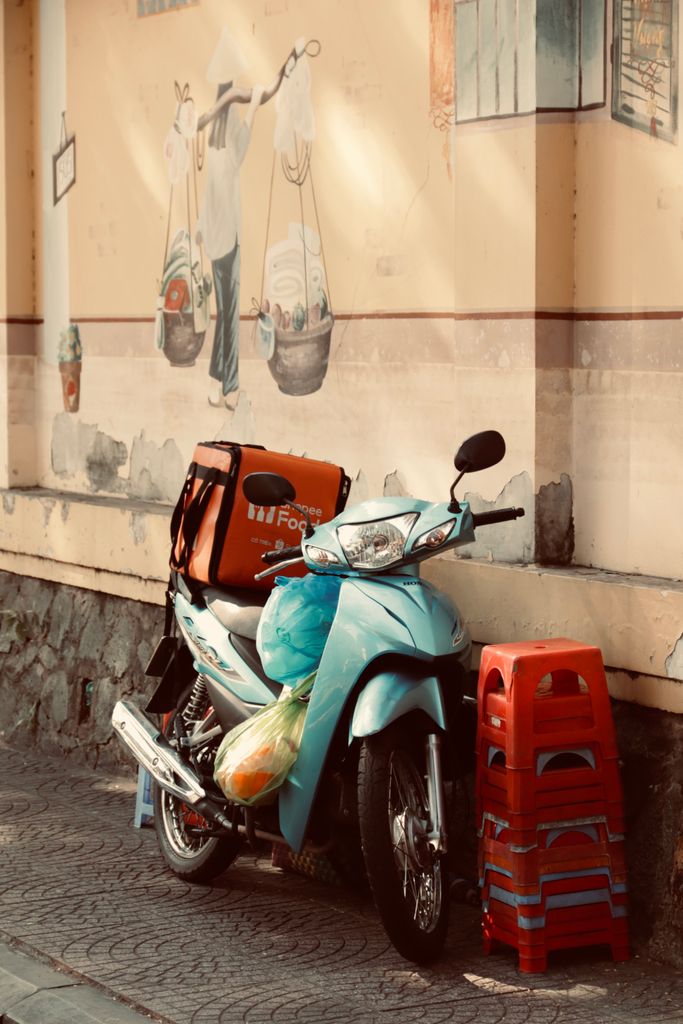
Fried chicken, jjajangmyeon (black bean noodles), samgyeopsal grill kits, entire multi-course Korean barbecue spreads, bingsu shaved ice, a single iced Americano — all of it moves across the city constantly, carried by riders on scooters threading between cars at speeds that still make me flinch slightly, years in. But food is really just the beachhead. Convenience store runs, pharmacy items, phone chargers, a specific brand of instant coffee you forgot to buy, laundry pickup, grocery hauls for the week — the range of what shows up at the door is wider than most first-time visitors expect, and wider, frankly, than I expected when I moved here.
The one that still gets people is dawn delivery, saebyeok baesong (새벽배송). Market Kurly popularized it, and the model is almost comically precise: order your groceries before 11 p.m., and a box shows up at your door before 7 a.m. Behind that promise is an actual cold chain running on a schedule — Kurly’s main fulfillment center reportedly packs out overnight and dispatches to several hundred drivers by around 2:30 a.m., each one covering a set route before the city wakes up, with produce and dairy held at controlled temperatures the whole way so nothing warms up sitting in a truck. You wake up, and there are fresh vegetables, milk, and meal-kit ingredients sitting outside your apartment door like they grew there overnight. I will admit this one took me longer to trust than chicken-to-a-park-bench did — handing over produce freshness to a system you can’t see feels different from handing over a box of fried food that’s sealed and obviously fine. But the logistics behind it are genuinely serious infrastructure, not a gimmick, and rival services have spent years and a lot of money trying to chip away at Kurly’s lead in that particular race.
The apps: Baedal Minjok, Coupang Eats, Yogiyo
Three names dominate the food side. Baedal Minjok — shortened to Baemin, and literally “nation of delivery” — sounds like marketing hyperbole until you actually open it and see the restaurant count: over a hundred thousand listings, which is why if a mom-and-pop place in your neighborhood delivers at all, it is almost certainly on Baemin. Coupang Eats leaned hard into raw speed instead, building a single-rider-per-order model — one rider, one bag, no stacking three deliveries into the same run — that tends to get food to your door faster, often somewhere in the fifteen-to-twenty-minute range for anything reasonably close. Yogiyo rounds out the big three, competing mostly on coupons and restaurant selection in specific neighborhoods.
Here’s a detail that trips up a lot of newcomers, and it tripped me up too: there’s no tipping. You pay the menu price plus a delivery fee, typically somewhere between 2,000 and 4,000 won — call it a dollar fifty to three dollars — and that’s the full transaction. No awkward percentage math, no debate over whether 15 or 20 percent is correct, no little screen turned toward you expectantly. Coming from a tipping culture, the first few orders felt almost suspiciously simple, like I was forgetting a step. I wasn’t. It’s just built differently, and once you stop looking for the tip screen, it’s honestly a relief. That said, the fee itself has become a bit of a battleground: rising delivery charges over the past few years pushed all three platforms into subscription territory, with Baemin Club and Coupang’s WOW membership both dangling free or discounted delivery for a flat monthly rate, which tells you something about how normalized the whole system has become — it’s less “treat yourself” now and more a subscribed-to utility, like a phone plan.
Why it’s this fast
Picture a twenty-story apartment tower with three hundred units stacked above a block of restaurants at street level, and a single rider can clear a dozen orders in that one building without ever really leaving a three-block radius. That’s the real engine: density. Seoul and most Korean cities pack a huge number of people into a relatively small footprint, mostly in high-rises, and that changes the math on delivery completely compared to a city where the nearest restaurant is a ten-minute drive away. Add to that a restaurant scene so competitive that any given dish has a dozen nearby sellers, and a cultural comfort with speed that long predates delivery apps — the phrase ppalli-ppalli (빨리빨리), “hurry hurry,” gets thrown around a lot, maybe too often, as an explanation for everything from construction timelines to internet speeds, but it isn’t wrong here. Koreans expect things to move quickly, and the infrastructure — broadband, road density, apartment numbering systems, GPS accuracy — was built in an era that made fast delivery possible almost as a side effect, not a headline feature.
That breathless efficiency is powered by real people on real scooters, though, and it’s worth not skipping past that. A lot of riders are working under app algorithms that assign routes, rate punctuality, and push toward tighter windows, often earning per delivery rather than by the hour, which is a structure that’s drawn real scrutiny. Groups like the Riders Union have organized around pay rates and accident insurance in recent years, and traffic safety for delivery workers shows up in Korean news coverage often enough that it’s clearly not a fringe concern. I haven’t done the job myself, so I’m not going to pretend I can adjudicate exactly how fair or unfair the pay structures are — but it’s fair to say the speed we all enjoy has a human cost that’s commonly discussed and reported here, not some invisible, costless magic trick.
Late-night ordering and the chicken-and-beer ritual
In Seoul, “closing time” is more of a polite suggestion than a hard rule. Convenience stores never close, plenty of restaurants deliver well past midnight, and chimaek — chicken plus maekju, beer — is close to a cultural institution rather than just a menu combo. Watch a football match or a baseball game that runs late, and you can set a clock by the surge of chicken orders that follows. I used to assume this was mostly a weekend thing. It isn’t, particularly. Tuesday night, studying for an exam, finishing a work deadline, nothing special happening at all — ordering chicken at 11 p.m. doesn’t require an occasion here the way it might where I’m from.
Part of what makes this possible, oddly enough, is something unglamorous: building design. Most Korean apartment complexes have intercom systems, elevator access, and standardized unit numbering that make a rider’s job of actually locating you fast and simple, even at 1 a.m. in a twenty-story tower. Compare that to a sprawling suburban street grid with unlit house numbers, and you start to understand why the delivery economy here operates at a different clock speed than in a lot of other countries — it’s not just the apps, it’s the buildings the apps are delivering into.
The small rituals nobody explains to you
A few things took me embarrassingly long to figure out. First, and this one genuinely startled me the first time: a lot of Korean restaurant delivery, especially jjajangmyeon and other noodle dishes, still arrives on real ceramic plates and metal bowls, with actual metal chopsticks, not a flimsy plastic fork. You eat, you stack the dishes — sauce-smeared and all — back in the delivery bag or just outside your door, and at some point later that day someone from the restaurant swings by and collects them, no questions asked, no extra fee. The first time this happened to me I nearly walked a full set of stainless steel bowls down to the building’s trash room, convinced they were one-time-use, before a Korean friend caught my arm with an expression somewhere between horrified and amused. It’s a system that runs entirely on an assumption I wasn’t used to making: that strangers will return something valuable without anyone checking up on them, and that it will simply work.
Second, building codes and gate entry: delivery apps now often ask for an entry code or a note like “leave at door, don’t ring bell,” which has become its own small social contract — this kind of contactless drop-off was normal here well before it became a pandemic-era habit worldwide. Third, and related, is the sheer trust involved: riders routinely leave food unattended outside doors in shared hallways, sometimes for ten or fifteen minutes if you’re not home right when it arrives, and it mostly just stays there untouched until you get it. That one still surprises me a little, even now, coming from places where a box left in a hallway has a shelf life measured in minutes before someone “helps themselves” to it.
None of these rituals get explained anywhere when you first move here; you just absorb them, order by order, usually after getting something slightly wrong the first time. A few questions come up often enough from friends and readers back home that they’re worth answering directly, so here’s the short version of what people actually want to know.
FAQ
Is delivery in Korea actually as fast as people say?
For food, yes, within reason. In a dense city neighborhood, twenty to thirty minutes from order to door is typical, and some single-rider services like Coupang Eats push toward fifteen. Rural areas and late-peak surge times (think Friday 7 p.m.) will be slower, so treat “Korea delivery is instant” as a city-center generalization rather than a universal law.
Do I need to speak Korean to use delivery apps?
Less than you’d think. Baemin and Coupang Eats both have English-language support built in now, and apps built specifically for foreign residents and tourists exist precisely to smooth over the parts that used to require a Korean phone number or a Korean-only interface. It’s not flawless, but it’s dramatically easier than it was even a few years ago.
Do you have to tip delivery riders in Korea?
No. The delivery fee is built into the order — usually a couple thousand won — and that’s the complete cost. There’s no tipping culture layered on top of it, which is one of the more pleasant adjustments for anyone arriving from a country where tipping delivery drivers is expected.